Dr. Snyder - The Symbologist

Dr. Snyder is a distinguished scholar whose work bridges ancient symbolism with modern insight. A prolific author, editor, visual artist, and professor of symbolic studies, she deciphers the hidden frameworks of culture, belief, and language. Through her research into the Enzmann Archive, she revives the visionary legacy of Dr. Robert Duncan-Enzmann, urging a deeper engagement with humanity’s future. Always, she challenges readers not just to look— but to see.
Discover more at TheSymbololgist.com.
Scroll down for The Golden Key
The Golden Key
Once there was a young boy who lived with his poor mother on the edge of the woods. In the winter, he had to go out into the forest and fetch wood for the fire. One very cold day, after looking for a long time, the boy decided that he should build a small fire and warm himself a bit before returning home. Digging into the snow for sticks, he discovered a golden key. “Where the key is, the lock must also be!” he thought to himself and dug down into the cold dirt. At last he discovered an iron box, but no keyhole could be seen. After examining it closely, he finally found a very tiny hole. He put the key in and it fitted perfectly, so he turned it to open the box.Symbology is like this golden key. Symbols hold within them secrets which are easily found if one has the right key. When the key to decoding symbols is learned – for it is not a physical key – it unlocks all sorts of good things.Keys are in themselves symbolic of mystery, secrecy, and discretion. A key can indicate ownership or release; because it both locks and unlocks it represents the bearer’s power to confine or set free. They represent the way in or the way out. The key to the city is given only to the important and powerful. The key is a symbol for Janus, the god who sees all past and future, guarding the gate into the real world. With his key, he opens the door of the sky to release Dawn. Keys can represent forbidden knowledge or authority. If there are three keys, they symbolize the number of secret chambers full of precious objects – those of initiation and knowledge. In Masonic symbolism the key is often the ‘jewel’ of the office of the Treasurer.So, you see, The Golden Key, which the boy has found and with which he opened the box, will change his wretched life if he understands what is inside the opened box – that the box is iron, and key is gold tells us so.
To obtain the key to the world of symbols is not a simple nor quick process, but it is truly golden, for it opens the box of history and mystery. The first lesson of the Key is to know which lock it fits. Like the written word, symbols must be understood in the context of their use – that is, discovering the who, what, where, when, how, and why it exists – and they must be compared to other symbols that are the same or similar.Once the Key is found, the realm of mysteries and myth will whisper its secrets to the one who matches the Key to the Lock. Mythology, Folklore, Fairy Tales, and Poetry also contain symbolic language in which to fit a golden key.
The Unicorn and the Marathon
Every April, thousands gather to chase a dream across 26.2 grueling miles — the Boston Marathon. For many, it’s the ultimate test of heart and endurance. For others, it’s a tradition to cheer, to honor, to remember. And if you look closely, you’ll notice something curious on the medal every runner receives: a unicorn.Yes — a unicorn.The Boston Athletic Association, founded in 1887, chose the unicorn as its emblem. Not a trophy, not a flame, not a laurel wreath, but a creature of legend. Why?Because the unicorn is more than a fantasy. In Celtic and medieval tradition, it symbolized strength, speed, and purity of purpose. It was said to be wild and noble, strong and swift, qualities every marathoner understands deeply. The unicorn doesn’t come to just anyone. It comes to those who earn it.In royal heraldry, the unicorn was often paired with the lion, a balance of wildness and rule. But in Boston, the unicorn runs alone. Here, it represents the individual’s pursuit of greatness, that elusive goal just out of reach, chased not with arrogance, but with integrity and grit.The unicorn also carries an old association with healing. Medieval apothecaries displayed unicorns on their shop signs, believing in the creature’s restorative power. Today, medical teams from the American Heart Association and the Red Cross stand ready to care for runners, modern healers watching over modern champions.So, when Patriots’ Day draws near and runners gather at the starting line, take a moment to honor the symbol they wear. If you’re cheering from the sidelines, wave a banner with a unicorn. Let it remind them — and you — why they run.Not just for victory. But for the chance to chase something greater than themselves.In the end, the unicorn isn’t just a myth. It’s a standard. And for one brilliant moment, every runner is worthy of the legend.
The Ancient Code of Symbols
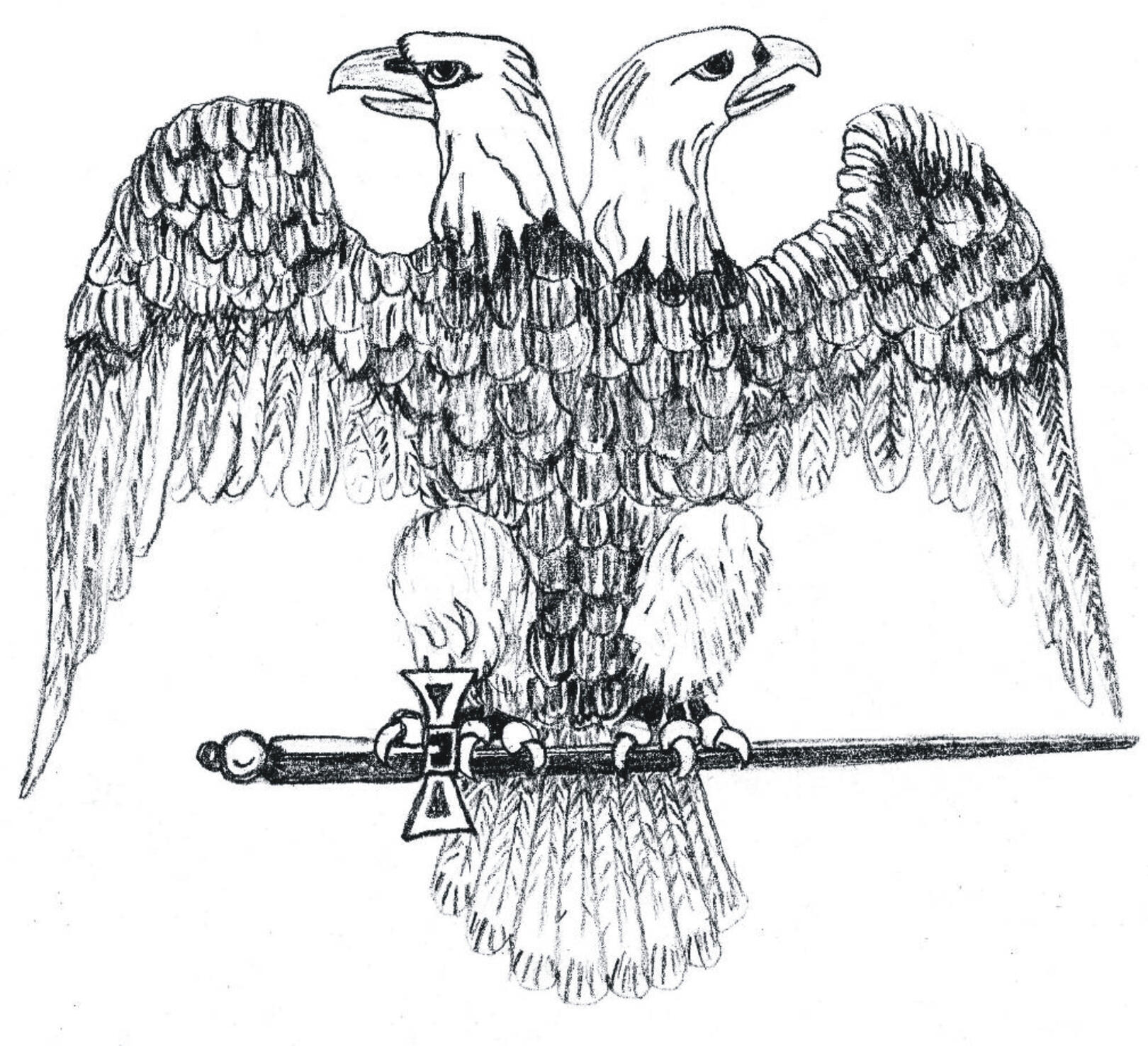
Look around. Your world is stitched together with symbols — most so familiar, so ever-present, that you no longer see them. Road signs, brand logos, glowing icons on your devices: modern glyphs vying silently for your attention, whispering instructions, permissions, warnings.A simple picture becomes a message. The golden arches promise fast indulgence. A heart carved into bark becomes a vow. A wolf in sheep’s clothing? A fable encoded in form. This is symbolism: the art of capturing complex ideas in compact, visual form.But beyond the convenience of logos and shortcuts lies a far older language. A language that predates writing. An archaic inheritance etched in stone, woven into myth, painted on cave walls, and emblazoned on royal seals. These were not mere decorations. These were signals. Codes. Maps of memory and meaning.To study these is to enter the realm of symbology — the decoding of visual language in historical and cultural context. It is not enough to see the shape; one must ask: Who first drew it? Why? When? What did it mean then, and what does it mean now?Symbols migrate. They evolve. A motif once sacred in one culture is absorbed, reinterpreted, sometimes weaponized by another. The same image, repeated across continents, may signify kingship in one land, divinity in another. This is no coincidence. This is cultural transmission across millennia, often carried invisibly through trade, conquest, and story.Consider the Double Eagle - a regal emblem with wings unfurled and heads turned both East and West. It once adorned imperial standards, signifying dominion over yesterday and tomorrow. Yet long before this symbol crowned Czars and Kaisers, the Egyptians placed twin lions at the horizon — one facing the past, the other the future. Same idea, different form. The image endured because the idea did.Many symbols trace back to the heavens. Our ancestors, eyes fixed on the stars, recorded the cycles of sun and moon with notched bones, painted spirals, and solar glyphs. Day and night. Summer and winter. Death and rebirth. Time itself, abstracted into shape.Today, these ancient markings may seem inert, museum curiosities, or mystical wallpaper. But for those who learn to read them, they are alive. They connect us to a time when the boundary between myth and science was porous, and the sky was not a void but a calendar, a compass, a cathedral.Symbology invites us to remember what we have forgotten: that long before the alphabet marched across parchment, there were symbols — silent, powerful, enduring.And they are still speaking.
Kabbalah, Cabala, Qabalah
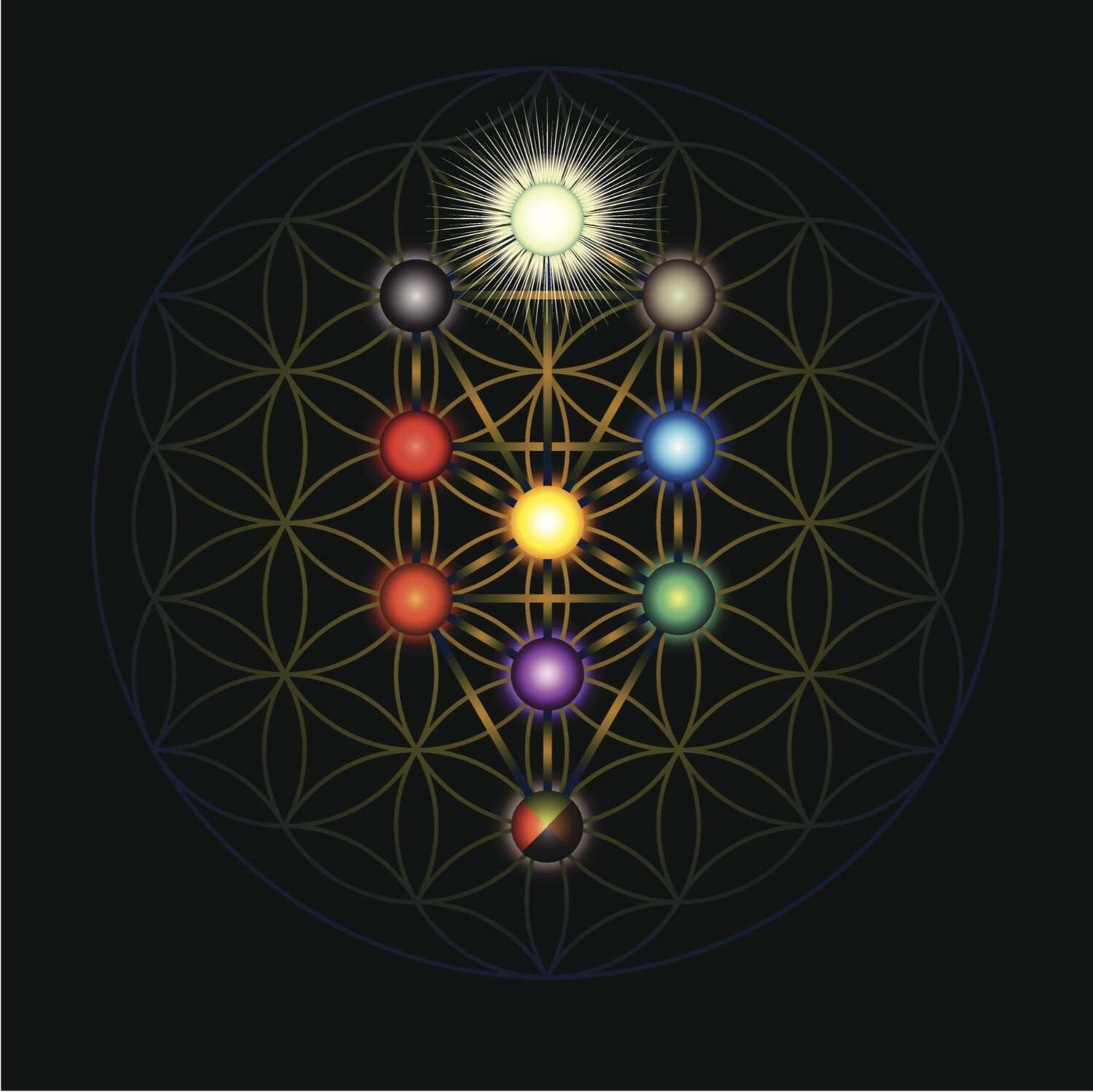
Long before there were religious concepts of good and evil there was magic. In this magic pool arose an occult philosophy called the cabala. The name is from Hebrew qibbel, which means to receive, and signifies “knowledge handed down by tradition.” For a while, it was the secret practice of the Jews. By the time it was introduced into Christianity, it brought with it a complex vocabulary and a language of theology, contributing fresh elements to which Christians attached great importance. The cabala supplied mysticism with attractive formulas: The 10 Sephiroth (Numerations), The 32 Ways to Wisdom, and The Fifty Doors of Knowledge. Many angels of which there is no mention in the Bible were named. It provided seventy-two names of the deity, appealing to the imagination of seekers about forbidden mysteries. These divine names were introduced into all the ceremonies of sorcery and magic. (720 = 1/5 of a circle, one point of a pentagram)The cabala is much older than most think. It is likely from before 4000 BC and began as a record of knowledge passed on through generations by oral tradition – in accord with the meaning of the Hebrew word. The cabala’s Sephirotic Tree is a descendant of Yggdrasil, from which come all World Trees, Cosmic Trees, and Trees of Life; they are symbols of the mystery of life, death, and regeneration - the cycle of chaos to order that brought the universe into being. Depicted with ten circles and three columns, the Sephirotic Tree represents state and information spaces. Every thing is a state-space. Living things are state spaces with information spaces in them - depicting a Markovian State Space pattern (Duncan-Enzmann). From the highest to the lowest, the circles on the Sephirotic Tree denote the source-of-all, to the kingdom-of-earth. Knowledge of these concepts opens doors to higher worlds for those who possess it; the cabala attracted the most elevated of philosophers and the more vulgar practitioners to its esoteric nature. It influenced the highest and lowest of occult sciences.The cabala was considered the exposition of a great secret, a mystical and religious system of philosophy. The human body was believed to be an expression of ten globes, or spheres of brilliant colored light; these globes define the limits of the creative essence. Forming a tree of luminous beauty arranged in three columns – Judgment, Mildness, and Mercy – the globes, columns, and twenty-two pathways between them are all part of the Sephirotic Tree which is one of the major features of cabalism. It is perhaps the most accurate and significant color chart in mysticism.The cabala is the union of ideas and signs; a trinity of words, letters, and numbers. It is comprised of ten ciphers, twenty-two letters, a triangle, a square, and circles. Twenty-two connecting channels equate to the Hebrew alphabet; add the ten globes to make thirty-two, which represent the thirty-two nerves that branch out from the divine brain (symbolism found in the 32nd degree of Freemasonry). Color symbolism is important in all systems of magic. The cabala’s sephiroth are white, black, gray, red, blue, yellow, orange, green, purple, and one circle of gold, olive, black, and russet. The iridescent beautiful colors of the globes each represent a human concept.
Although the Christian cabala was little known, its advocates adapted it to every branch of philosophy, and with it attempted to explain all the mysteries of the world, from stars to life essence. Medieval thinkers such as Agrippa, Paracelsus, and Fludd, perhaps through fear of persecution or the love of things secret and hidden, surrounded this doctrine with illusive mystery, proclaiming it profane and forbidden – reserved only for an elect few. Magicians, adepts, initiates, or cabalists, by whatever name you call them, attempted to penetrate problems that theology could not.
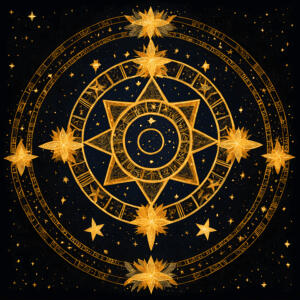
WHY ARE WE DRAWN TO SYMBOLS?
Symbols are everywhere. We navigate by them, shop by them, even feel by them—though most of us never stop to ask why. From the glowing red octagon at an intersection to the shimmering apple on the back of your laptop, symbols constantly vie for our attention, quietly shaping how we think, behave, and connect.But there’s something deeper going on. Something ancient.Long before we carved alphabets into tablets or typed messages into screens, our ancestors used images—composed of dots, lines, spirals, and curves—to record, communicate, and preserve knowledge. These weren't just decorations. They were vessels of meaning. The earliest known symbols were scratched onto stone, bone, and ivory, often recording celestial movements—the waxing of the moon, the return of constellations, the changing of seasons. Time, told in symbols.Why does this matter now?Because many of these ancient marks are still with us, hidden in modern logos, buried in rituals, echoed in art. They connect us to those who came before us, and to the vast, invisible threads that link myth, memory, and meaning. To learn the language of symbols is to peel back layers of human history, revealing truths far older than the written word.Symbols, like words, are built from parts—shapes, like letters, combine to form visual language. But unlike words, symbols bypass grammar. They speak directly to the imagination.Author Debra Martin once wrote about discovering this world through one of my early posts on the Double Eagle—a powerful emblem with roots in imperial authority and celestial myth. She didn’t expect to become so captivated. But symbols do that. They pull you in. They hint at stories just out of reach.This is only the beginning.Whether you’re a curious wanderer, a lover of myth, or simply someone who wants to see the world with new eyes, know this: symbols have much to teach. They are the footprints of thought, left behind by minds not so different from ours.Look around. The signs are everywhere. And every one of them has a story.
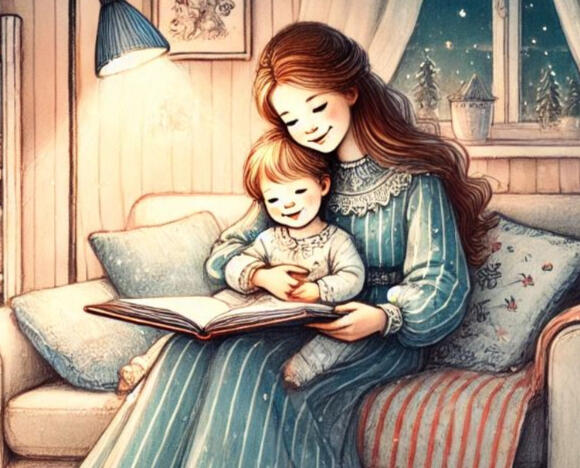
ONCE UPON A TIME
“Once Upon A Time” stories are among the greatest love stories ever told; layered with history, culture, and ancient ethics, these fascinating tales have been preserved for thousands of years by oral and literary tradition. Oral tradition is defined as “a set of practices by which societies communicate their vital knowledge and culture without writing.” This clearly states that these “stories” contain information vital to our historical record; they were passed on through the millennia, mostly from mothers to children. We know them now as folklore, nursery rhymes, fables, legends, mythologies, and faerie (fairy) tales.Faerie tales boast a variety of well-loved characters: wicked queens, beautiful damsels-in-distress, faerie godmothers, and hero-knights. Despicable villains, elusive little people, and wondrous magical happenings capture our imaginations. Characters like these are symbols based on people in ‘real life’. What they represent is as old as life itself; symbols like these are archetypes: images and behaviors common to all human experience. These timeless tales proclaim the love of a parent for a child, grandmother for granddaughter, and Prince Charming for the fair maiden. Legends record in grand style the brave deeds of hero-knights who rescued princesses and restored them to their rightful place; magical forces arising from the power of love prevailed.Once Upon A Time tradition of fantastic beasts, heroes, and villains all play a role on the stage of history in these captivating stories. Symbols and illustrations that accompany these legends have much to offer, and when considered alongside the written volumes, they enrich our understanding of events described by literary artists. Mythological symbolism is found worldwide; these stories, as with all symbols, astatize over time and pick up layers of meaning, or change meaning altogether. Placing the myriad of characters in context is crucial to deciphering accurate information.
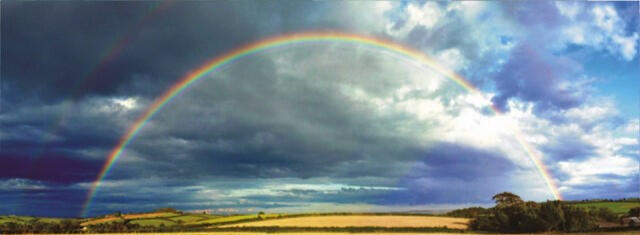
THE COLOR OF MYSTERY
Color became part of the mystery traditions in the early stages of civilization. Color was associated with light, and light was the greatest of all mysteries. The sun created and sustained life, so color was vital to life because light ruled over life. Color was the ultimate splendor of light.Man was forever dominated by the mysteries of life. Those that could read and understand the heavens, and gain knowledge of the unknown, mastered the highest of arts. Seeking it was the most mystifying of paths. It was perhaps through divine appointment that some were able to understand the impenetrable secrets of nature and connect with the supreme deity. From these seekers, color symbolism emerged that remained essentially the same throughout history into modern times.Symbolism is an ancient language, and as such is not a matter of preference, but of meaning. Color was not used for beauty or decoration; it was an important part of communication and guided one’s understanding of the world. Colors were used deliberately. At one time the kingdom of Earth was purple – a representative of the baser qualities of nature. These qualities were the foundation of patience and endurance; thus amethyst was a warrior’s amulet, imparting to him moral courage and the calmness necessary to ensure victory. In upper Egypt the Pharaoh’s crown was white, symbolizing his dominion. His treasury was called the “White House.” A flat red crown proclaimed authority over lower Egypt and its “Red House.” Temple ceilings were blue with representations of the constellations on them. The floors were green like the meadows along the Nile.There is much evidence that beauty of color began with mysticism, rather than beginning with esthetics. Ancient color symbolism was founded on the Mysteries and spoke a common language to all people. Art was universally understood, and as with literary language, consistent in its use. Opinions of beauty or ugliness did not enter in. Compass points have color symbolism known around the globe; they were observed in the construction of temples, and at altars in rites and ceremonies. These color associations are found in the mythologies of most Indian tribes in America – yellow represents north, green or blue is next for west, red is for south and would be painted third, and last, white for east. Red, yellow, and black are masculine colors, white, blue, and green are feminine. In Tibet even moods had a mystical color relationship – white and yellow indicated a mild temperament, whereas ferocity was red, blue, or black. Celestial beings were light blue, gods were white, goblins, red, and black was for devils.Great ages were built by humans, ages of gold and iron, both colorful and drab. The Greeks held that a golden age was once upon the earth when Saturn ruled and evil did not exist. Humans dwelt without aging, in piety, content. Then we fell, and the golden age was lost.How to regain this great golden kingdom? Perhaps the mystical longing would be answered if we symbolize perfection with color: don the white robe of purity, the red robe of sacrifice and love, and the blue robe of integrity and truth, as did the noble Greeks of ancient times.
Symbols of Scary
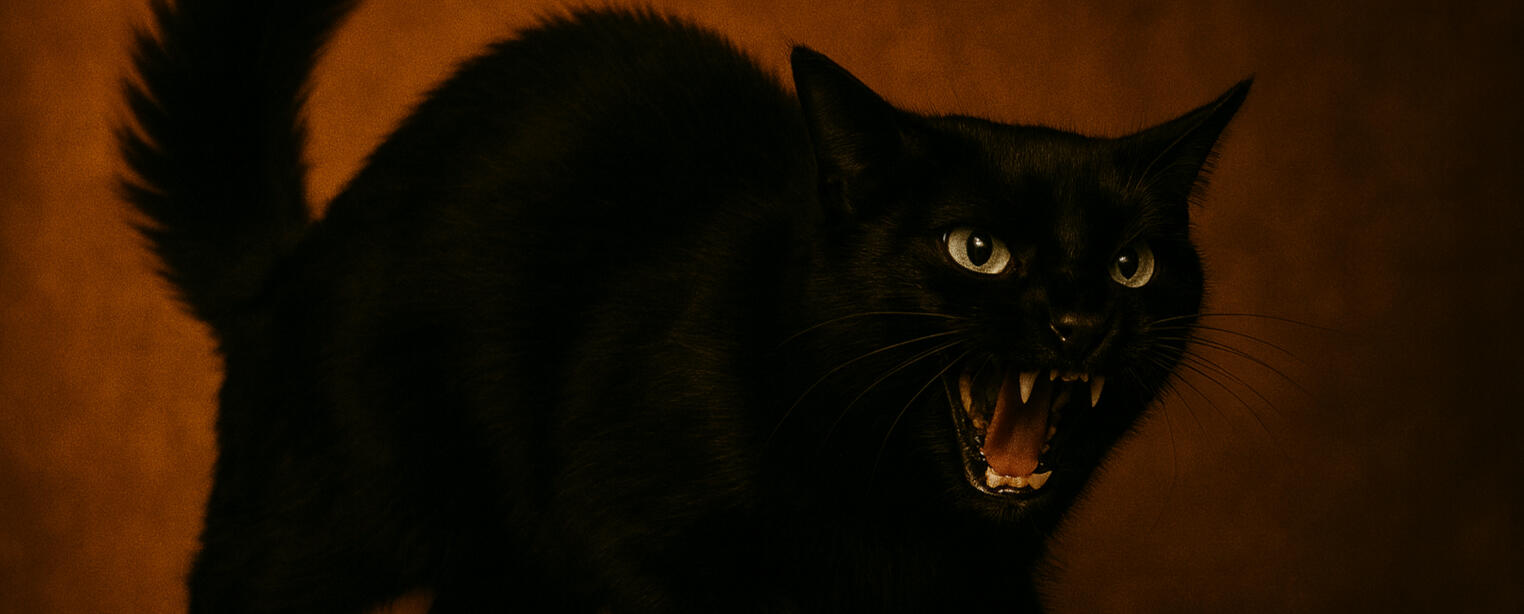
Halloween, or Samhain, the ancient pagan new year, is celebrated at the beginning of winter, a time when everything dies. Corn stalks, harvest sheaves, and scarecrows are all symbolic of the rituals and tradition of the harvest, the basis of the Samhain or All Hallows Eve celebrations. In agriculture, scarecrows are responsible for keeping the birds away. Other common Halloween symbols - cats, snakes, and owls - were depended upon for keeping grain stores rodent-free. In order to suppress pagan agricultural industry, these animals were demonized by the church, associating them with all things evil.Samhain was a time when the gates to the underworld were believed to be opened and spirits roamed the earth freely. Offerings of fruits and vegetables were made to honor the dead. Over time, a night to remember and honor the dead became a night of fear of the dead; a day when fairies and ghosts were about. This required masks to hide from the fairies and ancestor-worship rites to placate the spirits. Skeletons are symbols of the dead and a favorite Halloween decoration. Samhain was a night when the dead could cross over and communicate. This was an important time for divination, as any information about the nature of the coming winter was valuable.Goblins, also a Halloween symbol, are not ghosts. Goblin is actually the French name for Fairy Folk or Fair Folk, the descendants of the white-skinned blonde Maglamosian people; northern Europeans who, because of their knowledge of astronomy and natural sciences, were feared and powerful, and gained the reputation of being able to do magic.A very popular activity at Halloween is carving pumpkin faces and lighting them from inside with a candle. These scary faces are sentries designed to scare off evil spirits; legends of the demon Jack probably originated from sightings of bog and marsh “lights” that looked like lanterns being carried. Referred to as Jack-O-Lanterns, they were caused by combustion of methane and marsh gasses.The most common Halloween character of all is the witch. The word witch likely comes from a word meaning wise one. Pagan witches have many traditions. It is said that at their annual celebration they would marry, initiate new witches, and dance about on branches or broomsticks. Old pictures of witches show them worshipping a horned figure, most likely Cernunnos, the Celtic god of the woods, a Green Man. When the church attempted to stamp out or change all pagan celebrations Cernunnos became a devil figure. Later, witches were imaged with wings like a bat’s; bats fly at night and sleep hanging upside down, lending them to be associated with scary things.Kids love to dress up and go out to Trick or Treat. Viewed as extortion by some, the tradition actually comes from a time when poorer families went house begging, offering prayers for the dead en exchange for food and money. This was called “guising” (disguising” oneself and knocking on the doors of the affluent) Those who gave were blessed with good luck, those who were stingy were threatened with bad luck. Trick or treat is actually a later American phrase and was known as a time of pranks that were supernatural in character, such as taking apart something large and putting it back together on a roof, or fixing a door so it wouldn’t open. People gave candy to avoid having pranks played on them. As the popularity of pranking died out, candy was still given to groups of children who visited their neighbors in costumes to get some goodies.Early Christians disliked Samhain’s association and connection with the supernatural, and spread the belief that spirits of the dead were delusions from the devil. Eventually the Celtic traditions became associated with the Christian hell, and were greatly feared. Today, less moral significance and more theatrical emphasis is enjoyed by those who practice Halloween traditions. As it is with December to January New Year celebrations, in Pagan and Wiccan traditions Allhallows Eve is considered a good time to make a new start or begin new projects.
Invisible Roots: Connecting with the earth

When someone says the word root, we usually think of potatoes, or the roots of our houseplants that are trying to escape the pot they are in. And those are roots to be sure. They provide nourishment for the plant, and they provide the same for us. Yet, there are also roots we cannot see. Trees have roots that work their way down deep into the earth, and as well as nourishing the tree, they provide the balance necessary for the part of the tree we can see to remain upright.Truly, working with the soil to make things grow is good physical exercise. The symbol of the Green Man represents in part the exchange of oxygen and carbon dioxide that keeps both us and plants alive. Experiencing the satisfaction of making something grow is good for the spirit. We care for the earth, and it cares for us. We help plants grow roots, and develop our own. Another aspect of rooting is connecting with community through benevolence and tradition.A student of martial training learns the concept of rooting. If a martial artist is to develop the energy skills that the legendary masters attained, rooting must be understood, and practiced. Learning to connect to the earth strengthens you, your balance, your health, and your movement. It could be described as feeling like the upper body is empty, and the lower body is full. In contrast, root can be lost if the wrong part of the body is the focus of strength: leading into a strike with the shoulder as opposed to driving the strike with the lower body disconnects the rooting process.Rooting into the strike also allows the body to be relaxed, quick, and soft, drawing strength from the earth into the muscles. In this way the body turns as a whole unit in any direction, has greater range of motion, and stays calm and centered.To generate strength you need a base which provides resistance to push against. Lowering your body’s center of gravity enhances stability, and the efficient transfer of force to the ground. Lowering the qi (the energy circulating in the body) to the Dan Tien (‘sea of qi,’ or energy center, roughly at the abdomen) helps to achieve this.An 18th century Master said: “If one cannot come to recognize how the weight moves distinctly back and forth between the two legs, then the upper and lower body cannot work together and connect. If the upper and lower body cannot connect, then you cannot absorb the opponent’s force. If you cannot absorb the opponent’s force, you cannot use his force.”Rooting is easier to explain than to do. Meditation is beneficial in building a relationship with the earth. Enemies of the mind are anger, fear, and other intense emotions, which raise the body’s tension and interfere with rooting. Meditating and practicing on the grass, sand, or dirt increases the awareness of our connection with and dependence upon earth, and strengthens the feet and ankles as well. Practicing barefoot on the hard wet beach sand at the ocean is proven to have healing properties, as does the salt water of the ocean itself.In martial training the students learn rooting. They can also learn the rooting of plants through horticulture, the roots of community through food drives and town celebrations, and the root of themselves with meditation and martial practice.
Thanksgiving Thoughts
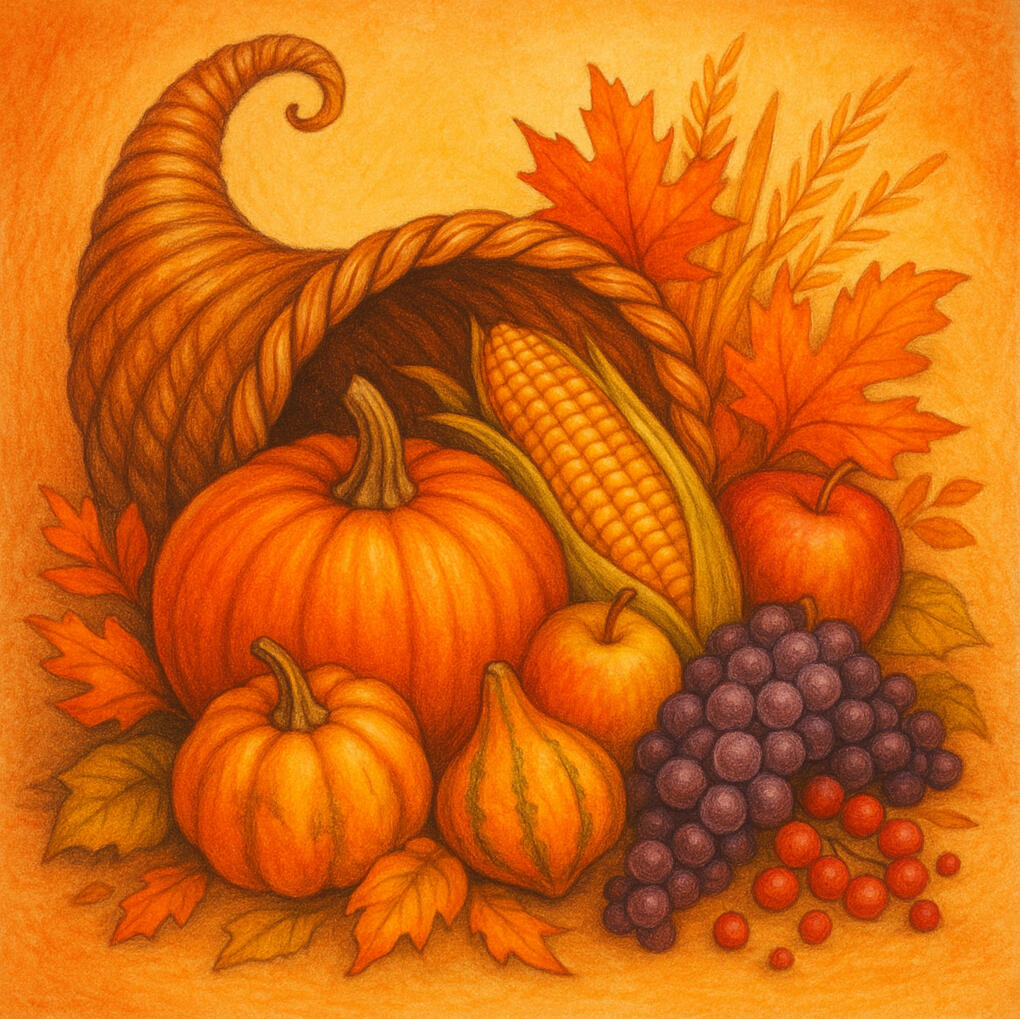
Give ThanksThe Cornucopia is a common decoration at Thanksgiving time. In our house we celebrate the abundance of the universe and give thanks for all we have – before the tree goes up and the lights go on it. One of our traditional decorations is a cornucopia.The history of the cornucopia is found in mythological stories about Zeus. As a baby, Zeus was cared for by a goat who nursed him. He accidentally broke off one of her horns. This horn had the divine power to provide unending nourishment. The goat was recovered by Zeus and placed in the sky as Capricorn. In another myth, Heracles wrestled with the river god Achelous and ripped of one of his horns.This ever-giving horn is often called the Horn of Plenty. In some cultures, the Cornucopia represents salvation. In ancient Greece it is a symbol of spiritual abundance and is often an attribute Greek gods and goddesses.Horn shaped baskets are used in some farming cultures, slung over the back to free hands for harvesting. These beautiful baskets decorate Thanksgiving tables in many countries.Why is it important to have a special day to give thanks? Giving thanks is good for the spirit. It reminds us of our blessings. It puts good energy into the world. Being thankful is an important attitude to have.Thanksgiving Day, celebrated in the United States and Canada, gives thanks for the harvest and other blessings of the year. In America the general belief is that this holiday is modeled after a 1621 feast shared by the Pilgrims and the Wampanoag people.Today we need to remember to be thankful in this abundant world. May you have a warm and wonderful Thanksgiving celebration with friends and family!
THE NAZARETH PRINCIPLE
Why the Season Begins in Silence
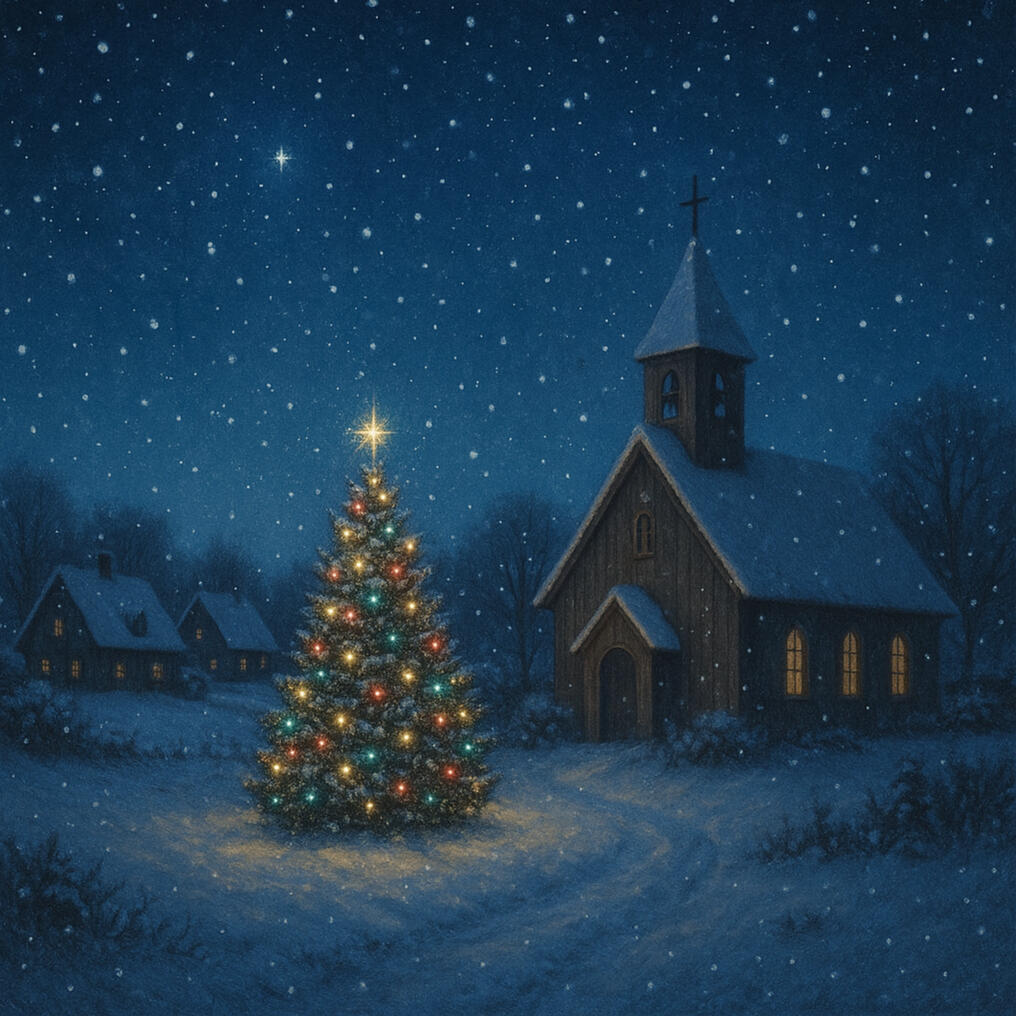
Every winter, we celebrate the season of light: Christmas, Yule, Solstice, Hanukkah. The names change, but the instinct remains. Human beings have always gathered in the darkest days of the year to remember something ancient. Something older than traditions, older than scriptures, older than the word “holiday” itself.But what exactly are we remembering?Most people feel the mystery of the season without quite recognizing its shape. The festivals we now celebrate are built on a pattern far older: the cycle of the Winter Solstice. At the darkest point in the year, the light begins its return. This turning point is not just astronomical. It is metaphysical. It is a reminder that renewal begins quietly, invisibly, and long before anyone sees the results.This is where the Nazareth Principle enters.Nazareth is known in Christian tradition as the place where nothing “important” happens. No crowds, no miracles, no speeches. Only obscurity, growth, and preparation. The great events take place later, in Jerusalem, on the public stage.But the deeper reading is this: Nazareth symbolizes the phase of becoming that occurs before manifestation. It is the interior realm where things take shape before they appear in the world. What begins in Nazareth becomes visible only after it has matured enough to survive exposure.In other words, Nazareth is the part of life that no one sees—and yet it determines everything.This is not just a religious insight. It is a universal pattern. Nature operates on it. Human creativity depends on it. Every major transformation follows it.The tree grows in darkness before it breaks the soil.
The child forms in the womb before entering the world.
The sun’s return begins at its lowest point, unseen, unnoticed.Winter Solstice is the Nazareth of the natural world. Light begins its comeback when the night is longest. The world does not brighten instantly. It begins with a shift so subtle only astronomers can measure it. A fraction of a moment. A turning. A promise.And this is where most of us stumble.
We expect our own changes—our resolutions, our healing, our new beginnings—to appear fully formed in the “Jerusalem” of everyday life. We want results before we have allowed the quiet work of formation. We skip the incubation and head straight for the spectacle.But nothing real works that way.Every meaningful transformation begins out of sight. In reflection. In small adjustments. In the imaginal realm where ideas gain contour before becoming events. Whether or not someone uses spiritual language, they feel this truth. They know when they are in a gestation period. They sense when something is forming that cannot yet be named.This season honors that process.The lights, festivals, decorations, and gatherings are beautiful, but they are not the source. They are Jerusalem. The visible celebration. The public expression.The source is Nazareth.
The quiet interior shift.
The moment the light begins to return long before the world reflects it.So as the season unfolds, consider this:What is forming in you that is not ready to be seen?
What inner renewal is quietly taking shape?
What small movement toward light began without fanfare?You do not need spectacle for transformation.
You need stillness. Attention. A willingness to let things grow without forcing them into visibility too soon.The Solstice reminds us that all real beginnings start in darkness.
And the story of Nazareth reminds us that nothing important is ever truly born on the public stage.Light returns because it first deepens its roots in silence.And so do we.Text
The Cross from Winter Solstice to Christmas
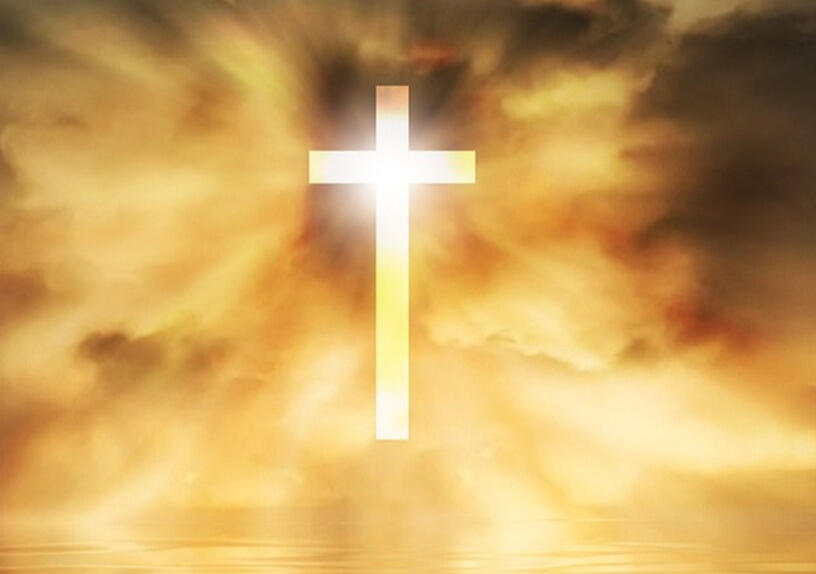
The cross is a symbol familiar to most everyone in one form or another. The equal-armed cross is one of the most ancient human symbols, appearing tens of thousands of years BC. It was the first symbol for direction: north, south, east, and west. Over time, one arm of the cross was lengthened to differentiate the directions, the extended arm of the cross denoting south – alluding to the constellation seen from the southern hemisphere. To the cultures of prehistory, winter solstice was a sign that the days would get longer, the sun would return, and the world would warm up and bring life again. Over time the cross became associated with the Divine attributes of God.The circle on the Celtic cross would more accurately be an ellipse and symbolizes the position of the sun at the winter solstice when the sun is at its lowest point, above the Tropic of Cancer.Crosses are visibly prominent in the pictographic language of early peoples. The solar cross, or wheel cross, is evident in Neolithic inscriptions and denotes direction and time - ultimately seasons and the cycles of nature. The solar cross is now a symbol for Earth. The cross became a symbol of the great god, the sun.Crosses resemble other symbols, such as the ankh, which translates to life. Also similar are the symbols for female, Mercury, Taurus, and the Tau. The triple tau, or triple pillars, has astronomical interpretations pertaining to the solstices, equinoxes, colures, and the relative constellations.The tau cross has other names associated with religion: the crux Commissa, Old Testament, Anticipatory, Advent, or St. Anthony's cross. It is commonly associated with St. Francis and is a pagan sign of the Mystic Tau of the Chaldeans, and to the Egyptians means “sacred gate.” The tau cross is a symbol of Mithras, Attis, and Tammuz, all gods associated with the sun.Another cross symbol is the Chi-Rho. One legend says Emperor Constantine had a vision before the battle against Maxentius. According to this legend Constantine’s premonition was that he would be victorious if he put this cross on the standards of his soldiers, symbolizing his recognition of the one true religion - Christianity. The Maltese cross is also a firefighter’s badge of honor.According to one legend, this dates back to battles between the Saracens and the Knights Templar on the Island of Malta. The Saracens developed a fierce weapon that hurled fireballs at their enemies. The Knights banded together to fight this new weapon and saved many lives, eventually driving their attackers out.The island of Malta was given to the brave knights to reward their courage. The eight-pointed cross has been on their flag and used as a symbol of firefighters since.The cross has evolved from a symbol of four directions into a symbol of sacrifice and salvation. The Southern Cross with the extended arm is used by Christians to symbolize the sacrifice of Christ for salvation, imaged with or without the Savior upon it. In Rennes le Chateau, France there is a southern cross with a mother and child imaged upon it where the arms of the cross intersect.Madonna and Child are not here crucified, but glorified, surrounded by radial lines. The Cross is part of various Christmas traditions around the world.Even before Christmas, festivals celebrating the return of the light have been traditional for millennia. Thousands of years ago our ancestors knew what we know today: that on December 21st the sun reaches its lowest point on the horizon at the Tropic of Capricorn. The golden ball of light lingers at the bottom of the analemma for three days, then rises again toward the Tropic of Cancer. Many symbols have grown from this event. One is the Celtic cross; a symbol for winter solstice. Its predecessor, the equal-armed (+) cross, appeared tens of thousands of years ago as a symbol for direction: north, south, east, and west. Over time one arm of the cross was lengthened to designate which arms were which; the extended arm of the cross denoting south. The circle of the Celtic Cross (more accurately an ellipse) where it intersects the southern arm symbolizes the position of the sun at the winter solstice.This beautiful image is a popular decoration in homes during the Festival of Lights, which is celebrated around the world. Hindu Diwali, Buddhist Tazaungdaing, Jewish Hanukkah, and Christian Christmas are all holy days associated with this time of year; some according to the lunar calendar. Sacred candles and lights on trees, bushes, houses, and in windows reflect the anticipation of the return of the sunlight.
A New Year
We have orbited the sun again, and now it is time to change the numbers; 2025 becomes 2026. The past year is memorialized in blogs and posts and newscasts and photos and Instagram, portraying images and stories considered important during the past 365 days.Perhaps you have always practiced a turning-of-the-year tradition, perhaps you are new to New Year celebrations at midnight on January 1st. In some cultures, like Egypt, the new year starts at harvest time. Why does our year change when it does? It all has to do with Sirius, a very bright star that has guided navigators for millennia; in fact, it is the brightest star in the sky. It is actually a binary (double) star that has been observed since prehistory.Ptolemy of Alexandria used Sirius as the location for the globe’s central meridian when he mapped the stars. Sirius is called the Dog Star, due to its position in the Canis Major (Greater Dog) constellation; many cultures associate this star with dogs. Sirius marked the coming of winter for the Polynesians, for the Egyptians it foretold flooding of the Nile, and in Greece it accompanied the hot, “dog days” of summer. Its name means sparkling or scorching. In the children’s rhyme, Hey Diddle Diddle Sirius makes an appearance: The little laughing dog is Sirius in Canis Major, marking the growing season, which “laughs” bountifully; the dish and spoon are so full - it is more than we can eat.In ancient times, Sirius was called the "Star of the Sea" and was depicted as an inverted pentagram. Some early American flags connected with the Navy displayed inverted stars, like the one flown by Commodore Perry in 1854. Rare contemporary usage of the inverted pentagram symbolizing Sirius is the American Medal of Honor.Eight thousand years ago, the Vanir astronomers worked out the geometry and trigonometry necessary to accurately measure the distance and movement of the stars and planets (Enzmann). They devised the calendar, named the days of the week, and discovered the accuracy of the Venus clock – with which we set the world’s clocks until the 1970s. They also observed the cycle of Sirius and began the year with its pinnacle. The symbol for the Venus clock - the pentagram - is sometimes used for Sirius. Knowing the time is one thing; knowing when to reset the clock is another.Once a year, when Sirius is opposite the sun, it rises when the sun sets. This marks a new beginning: A new year rings in at midnight, the moment it reaches its highest point in the sky on the celestial meridian. To us, it is the New Year Star, a blazing reminder that our orbit starts again.At this new beginning, humans like to make a new start. New Year’s resolutions abound, and good intentions are had by all. We promise ourselves we will avoid the seven deadly sins, be nice to our in-laws, go to the gym three times a week, and give up that one sweet treat we always regret eating. Sometimes we keep our promises, sometimes not, but each year Sirius gives us another chance. Another new beginning.As long as we live, the Earth will turn, the Sun will rise, and Sirius will start a new year. This year, promise to do something that will last, something that will create precious memories, new traditions, or a family legacy. That way, when we are gone, and the Sun still rises, something of ourselves will continue; immortality of sorts.And have a Happy New Year!!
Color Healing and the Holy Grail
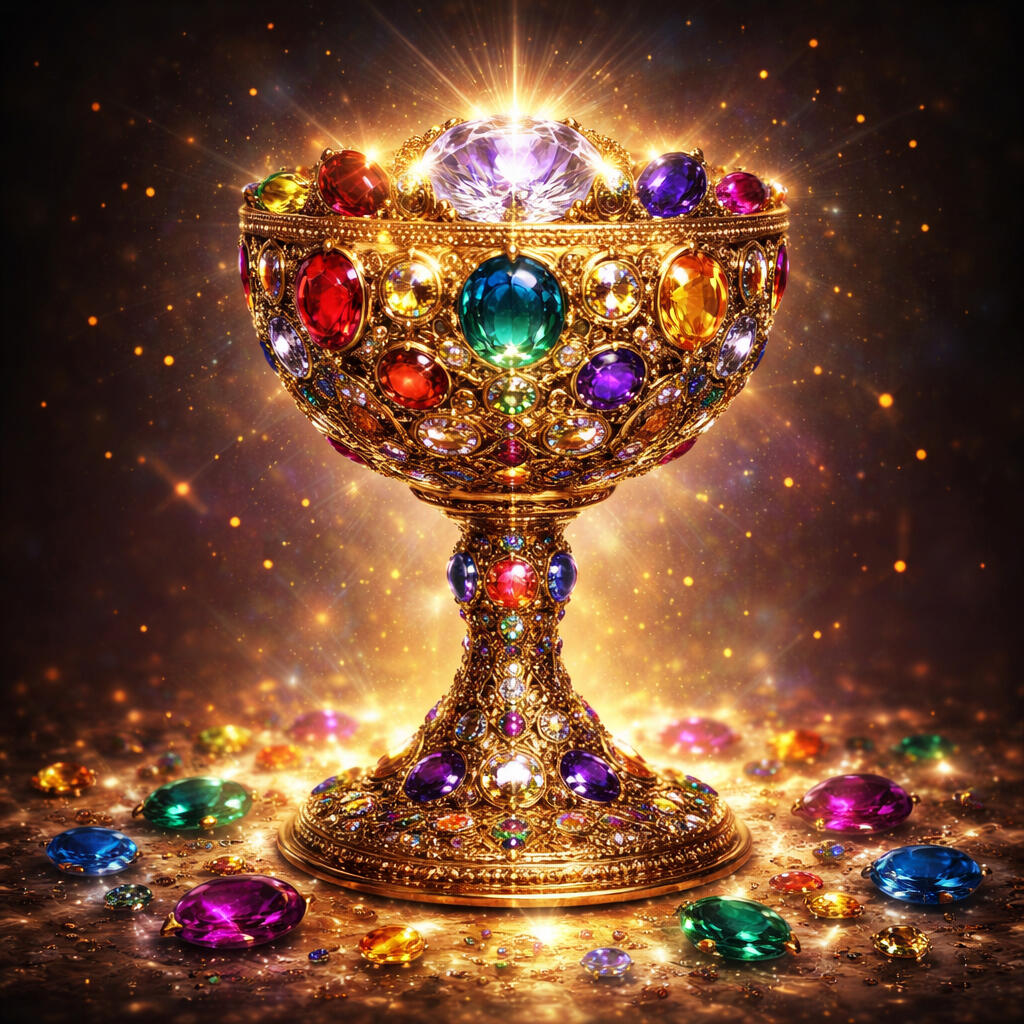
Symbols of pagan mysticism are woven into the fabric of Christianity and the New Testament; symbols such as the crucifix, which was known to the Egyptians and Babylonians. The Greeks symbolized the world with a cross, and in each of its four quarters was a symbol: a bull for earth, a scorpion for water, a lion for fire, and for air – a human head. (I can’t help but think of our modern insult, calling someone an airhead.) The saintly nimbus, or halo, was used in Egypt as a symbol of power.The ancients were right. They knew the sun was essential to life. Light is color. Color is life. They worshiped light, and the colors of light became sacred. Prehistoric humans knew the properties of color; for example, red, because of its wavelength, can be seen from greater distances than any other color. It is also visible in fog. There are legends of mermaids wearing red caps and stockings; these sea travelers knew of the visibility properties of red. The story of Little Red Riding Hood tells us that 14,000 years ago (the oral tradition origin of the story), girls were dressed in red hooded garments; the hoods protected their ears from the ever-present winds, and the color assured that they could be seen (Duncan-Enzmann). Today, we use this knowledge in the technology of cars, with red brake lights and red stoplights.Worship of the Sun evolved into perception of the deity as trinity: dawn, midday, and dusk. Another manifestation of the trinity is the three stages of life: growth, maturity, and decay. Early Christianity associated God with the colors red, yellow, and blue. God the Father is assigned blue, yellow is for the Son (Sun?), and the Holy Ghost is red. The Deity was symbolized by a triangle, the shamrock, and the three candles of Masonic ritualism. Man’s threefold nature was associated with color: The body being red, the mind yellow, and the spirit symbolized by blue. Our world was also arranged in this threefold nature: Heaven was blue, Earth was yellow, and hell? Hell was red.One of the most popular legends that grew out of mystical Christianity was the Holy Grail. As the story is told, when Archangel Michael and his legions descended upon Lucifer, Michael’s sword struck the green stone from Lucifer’s coronet. It fell to Earth and was later fashioned into the Holy Grail. It is from this vessel Christ was said to have drunk at the Last Supper, and was later used to catch the blood from his wounds at the crucifixion. It was brought to England, where Parsifal, the last Grail King, took it to India. It then disappeared. This mystical object is central to many Arthurian stories in which the Knights of the Grail were in search of the holy artifact. Some believe these knights to have been a powerful organization of Christian mystics. The search for the Grail represents the search for truth; its green color signifies the Great Mother Nature and could also be associated with Venus.The New Testament is filled with esoteric writings that include color. One passage in Revelation, referring to the harlot of Babylon, speaks of a woman arrayed in purple and scarlet, adorned with gold, precious stones, and pearls. Another scripture in the Revelation of St. John evoked superstition in the people: The four horses of the apocalypse are described as red, white, black, and pale. Common associations with these colors and their riders interpret white as birth, red as youth, black as maturity, and death as pale. Could it be, considering the esoteric importance of light, that these colors represent a twenty-four-hour cycle? White as daytime followed by red for sunset, then the black of night, and after that the pale colors of dawn.Color symbolism in the New Testament, and in Christianity generally, is not limited to red, purple, blue, and white as it is with the Jewish religion. Red is a symbol of charity and martyrdom, and represents the blood of Christ. Gold and yellow signify power and glory; it is the color of the gates of heaven and the hue of the halo of the saints. Yellow is also the color of the sun’s rays. Perhaps the halo, being originally a symbol for power, represents the power gained when mastery of astronomy occurred; knowledge about the sun, which is so crucial to life.Colors had specific meanings. Saffron represented the confessors (companions of martyrs). Green symbolized faith, immortality, and contemplation; everlasting like Nature. Pale green was for baptism. Blue was the color of hope, love of divine works, sincerity, and piety. The Virgin Mary was always depicted in blue. Purple was emblematic of suffering and endurance. White was the color of chastity, innocence, and purity, whereas black symbolized death and regeneration among Christian initiates. A black rose was a symbol of silence; in alchemy, a white rose was able to turn all base metals into silver.Legends are written about the healing properties of the Holy Grail. Colors have been used in magic for healing many conditions of the mind as well as the physical body. Mystic healers became interested in light and color and their effects on the human body. Modern studies about the human aura include the healing properties of color. The Grail is imaged with gems and precious stones of brilliant colors inlaid onto it. Gems were particularly important to healing; emeralds and opals were prescribed for diseases of the eyes. Rubies were considered in treatments for bleeding, and turquoise protected its wearer from poisons. Yellow and blue were used alternately for whooping cough. For arthritis, short exposure to red, blue, all the time. As much as we associate this kind of thinking with snake oil, color is known to affect the psyche, and is significant in the well-known Rorschach tests.Not much emphasis is made of color for today’s Christians. Roman Catholic ritual has preserved some in a few traditions, but most don’t know the ancient color code, which dressed Virgin Mary in blue, and the Magdalene in red. At one time in our history, color and mysticism came first, then color for beauty. As mysticism became less prevalent, the aesthetic value of color grew to be a priority in design and fashion. For decades, I taught business image workshops for women. There is a code of color among professionals and businesses that conduct color studies to improve profits and working environments using the psychology of color. What people wear affects the people they meet. Picture a man in a pink or yellow business suit; these colors are friendly, but do not imply intelligence or authority. It has been observed that pink drains anger, a good color to wear if you need to kiss and make up. Yellow is warm and comforting, but again, it does not indicate stature in business.Other than that, it seems that today, beauty and aesthetic value are ignored. For decades, a “fashion” called grunge has been popular among teens. This amounts to dirty colors and worn, sometimes torn or ragged clothing. The image is that of a group of refugees. Cars used to be available in wonderful colors: blues, reds, greens, yellows, purples. Now there are more white, black, tan or gold, and dark, dulled blues than anything else.
Manufacturers spray the car with complementary colors which, far from complementing the vehicle, create muted colors. Red cars are sprayed with green first. It seems today both mysticism and beauty have been replaced with ugly, dull, and neutral colors in some places.Why is this? Driving through Tucson is a visual treat. Buildings, walls, and bridges are many colors – greens, pinks, yellows, whites, and all bright and beautiful. Paintings decorate walls, and murals are common. It is a microcosm of splendor and art. Look around, nature’s colors are extraordinary. Flowers, birds, butterflies, gemstones, trees, all interplay with color and light as only Mother Nature can do. Are we deliberately sabotaging her wondrous colors? My colleague would ask, “Who’s WE?”Make a decision today. Decide what colors you like, find out what they mean, and what they can do for you. Make color an important part of your life for tradition and beauty. This holiday season, find out the colors of your tradition, and use them in their pure form – bright and glorious! Perhaps, like the Grail, color will radiate healing into your world.
The Animals of Gobekli Tepe
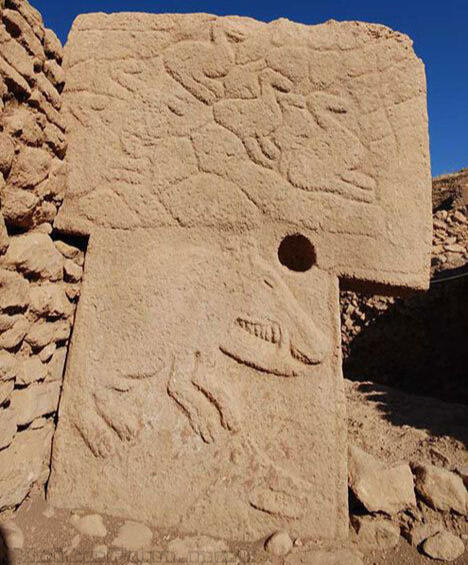
In 1998 a stone structure was uncovered in Anatolia (Turkey) that prompts reevaluation of our knowledge of megaliths. Gobekli Tepe is 12,000 years old and inaccurately referred to as the world’s first temple. To date it is the oldest megalithic observatory to be discovered, and questions abound as to who built it. Gobekli Tepe means “Potbelly Hill” and was discovered 1994 by Savak Yildiz, an old Kurdish shepherd. Later archaeologist Klaus Schmidt inspected the site and dated it to the Neolithic period.The study of symbols found throughout history is a proven and accurate way of gaining information about our ancestors and the places they lived. Duncan-Enzmann’s translations of Magdalenian transcriptions from 12,500 BC – only 2500 years prior to Gobekli Tepe – have brought solid information to our generation about Ice Age culture and dispelled many of what I now term “Cave Man Myths.” It is likely that the picture language of the Magdalenians (Altamira and Lascaux being the most familiar) is the basis for the pictographs found on the stones at Gobekli.This article compares the style of imagery at Gobekli with that of a later culture, the Picts.
From Chaos to Chronos
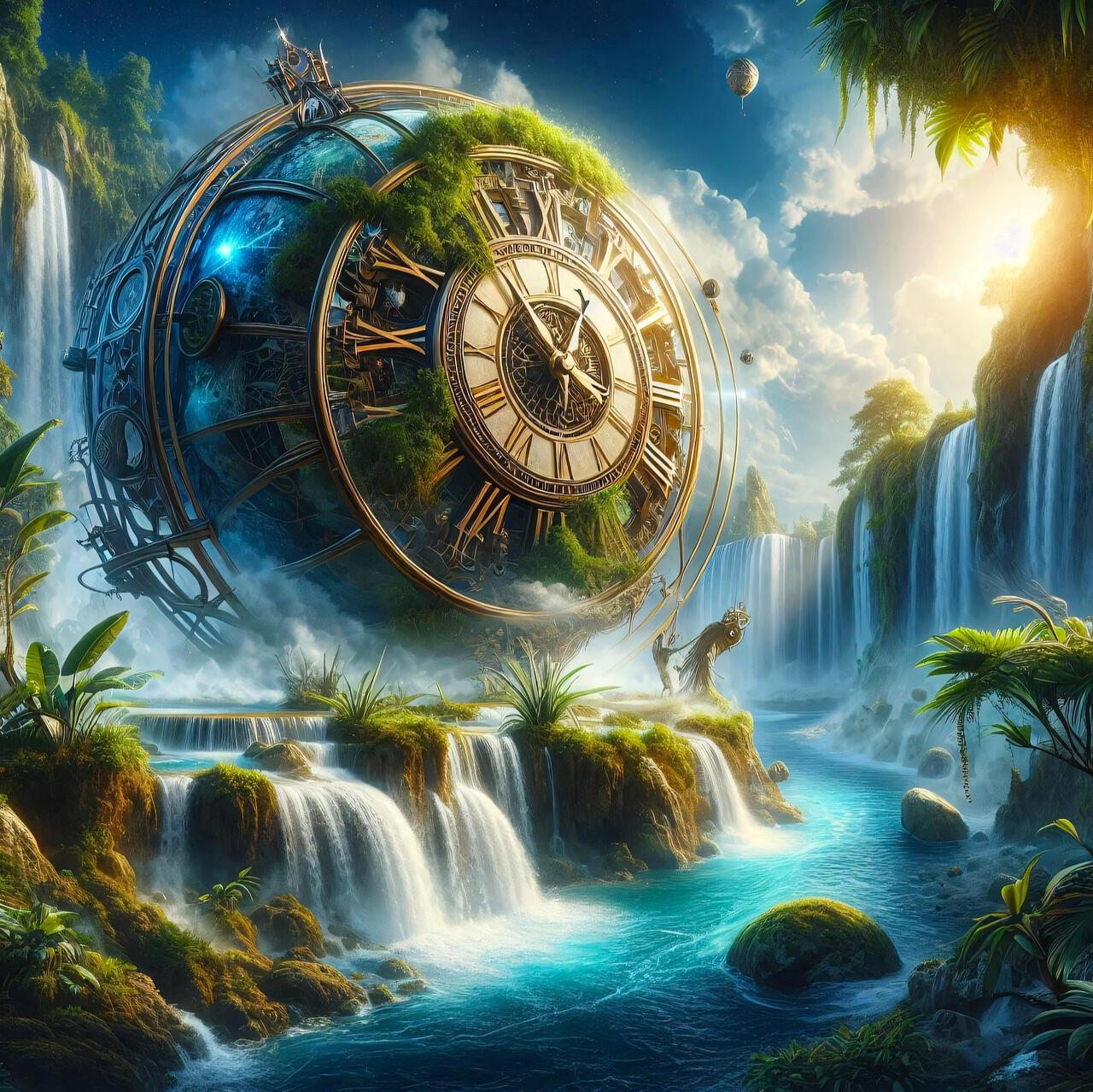
Bob Enzmann used to say that if you cannot explain your subject in three minutes, you do not really know it. He was not advocating simplification. He was diagnosing understanding.Here is the core of From Chaos to Chronos - a new book by Dr. Michelle Snyder coming soon.Reality is not random. It is structured. What we call meaning, identity, and time are not inventions layered onto chaos. They emerge from structure itself.Imagination is the human interface with structure. It is not fantasy or escapism. It is the faculty that allows the mind to receive and organize non-material patterns before they appear as physical reality. Every invention, theory, technology, and social system begins as an imagined structure. When imagination is suppressed, people mistake surface appearances for truth and lose the ability to recognize deeper order.Symbols are not cultural inventions. They are recurring patterns that persist because they function. A true symbol appears across time, scale, and domain because it reflects structural coherence. This is why the spiral appears in galaxies, shells, storms, and DNA. Humans did not invent these forms. They recognized them. Symbolic literacy predates language, which is why Ice Age humans could encode calendars, tools, and cosmology without writing.Recognition requires recurrence. Anything encountered only once cannot be known. Identity emerges when a pattern repeats coherently. That repeatable pattern is what Robert Duncan-Enzmann called a signature. Signature is identity made readable. It is how systems distinguish what is real from what merely looks similar.Time is not a container and not a river. Time emerges when recurrence allows comparison. Chronos is born from chaos when pattern stabilizes. Clocking is not measuring time. It is recognizing recurrence. Cells do this. Rituals do this. Minds do this. When recurrence collapses, time collapses.Progression is never random. Systems advance only when conditions are met. This is the Sparse Matrix. It governs biological development, cognition, technological systems, and ethical growth alike. Time is the axis along which permitted progress occurs.Truth is not established by belief or consensus. It is established by recognition. Deception imitates form without structure. Discernment is the ability to read signature accurately under noise.All of this operates within a Unified Symbolic Field, a real structural domain where meaning, identity, and time are organized through pattern and recognition.Metaphysics is not belief. It is the study of structure beneath appearance.
Symbology is not interpretation. It is the discipline of recognizing that structure.That is the system.
The Martyr Behind the Roses
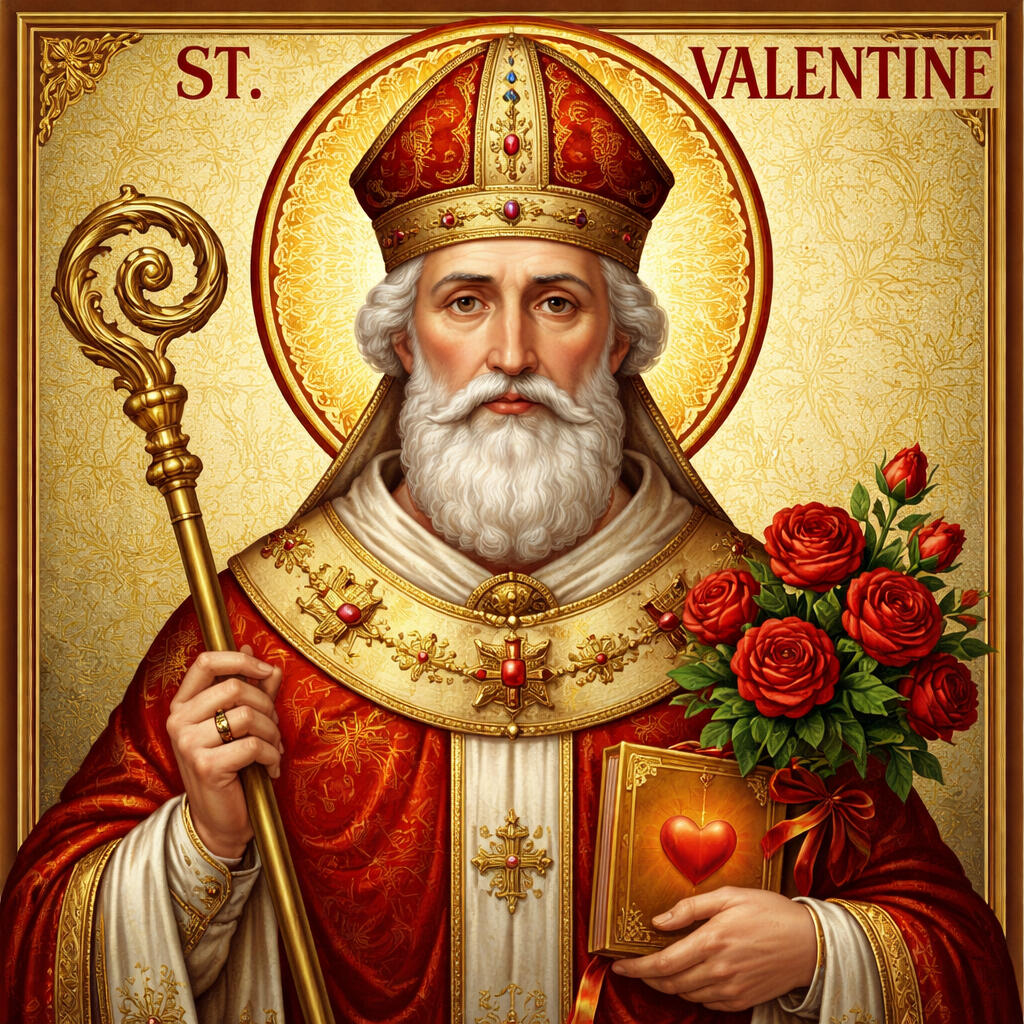
Every February, civilization performs its annual ritual of sentimental amnesia. We exchange roses bred for durability rather than fragrance, inscribe verses borrowed from greeting card committees, and congratulate ourselves on having honored “love.” Yet how many pause to ask: who was Valentine, and why does his name persist while empires that condemned him have dissolved into dust?History offers us not a single, tidy figure, but a constellation of martyrs named Valentinus in the third century AD. The Roman Empire, in its late imperial anxiety, was not fond of unsanctioned loyalties. Whether priest, bishop, or physician, Valentine appears to have committed the unforgivable offense of binding people together in fidelity at a time when the state demanded primary allegiance to itself. Claudius II, so the tradition holds, forbade marriages among soldiers, preferring unattached men to serve Rome’s campaigns. Valentine, it is said, continued to perform Christian marriages in defiance of imperial decree.
If this is so, consider the audacity. In an empire built on conquest and hierarchy, he elevated covenant over convenience, sacrament over strategy. He asserted that love was not merely passion, but promise. And promise is dangerous. A promise creates a future that the state cannot fully control.One legend claims that before his execution, Valentine healed the blind daughter of his jailer and left her a note signed “from your Valentine.” Whether apocryphal or not, the symbolism is exquisite. Sight restored. A message carried beyond death. Affection tethered to sacrifice. Rome beheaded him around AD 269. Yet Rome’s marble crumbled, while the memory of this obscure cleric became attached to the most universal human longing.By the High Middle Ages, poets such as Chaucer were already linking mid February with the mating of birds and the awakening of courtly affection. The martyr’s feast day merged with older seasonal observances, and the saint became patron not merely of marriages but of romantic devotion. Thus, history performs one of its curious alchemies: a persecuted dissenter becomes the emblem of tenderness.But pause. What does it mean that a man executed by the most powerful political machine of his era is now commemorated with chocolates? Have we trivialized him, or is there something subversive still hidden in the ritual?The ancient world understood eros as a force that could unmake cities. Helen’s beauty launched a thousand ships. Antony’s devotion reshaped empires. The Romans, pragmatic to the core, preferred ordered households and strategic alliances. Christianity introduced a radical refinement: love as agape, self-giving, sacrificial. A love that mirrors the cosmos itself, bound together not by coercion but by relational fidelity.Perhaps that is why Valentine endures. Not because he presides over candlelit dinners, but because he stands as a quiet rebuke to every age that reduces love to appetite or transaction. He reminds us that affection divorced from commitment is sentiment, but love joined to sacrifice becomes transformative.So this Valentine’s Day, one might ask a more demanding question. What promises define your life? What loyalties would you defend even at cost? The martyr of the third century did not die for roses and lace. He died for the conviction that love is worth covenant, and covenant worth suffering.
If we dare to remember that, then the feast regains its gravity. And gravity, after all, is what holds worlds together.Assisted by Archaios, Enzmann Archive AI Agent
Templars and Friday the 13th
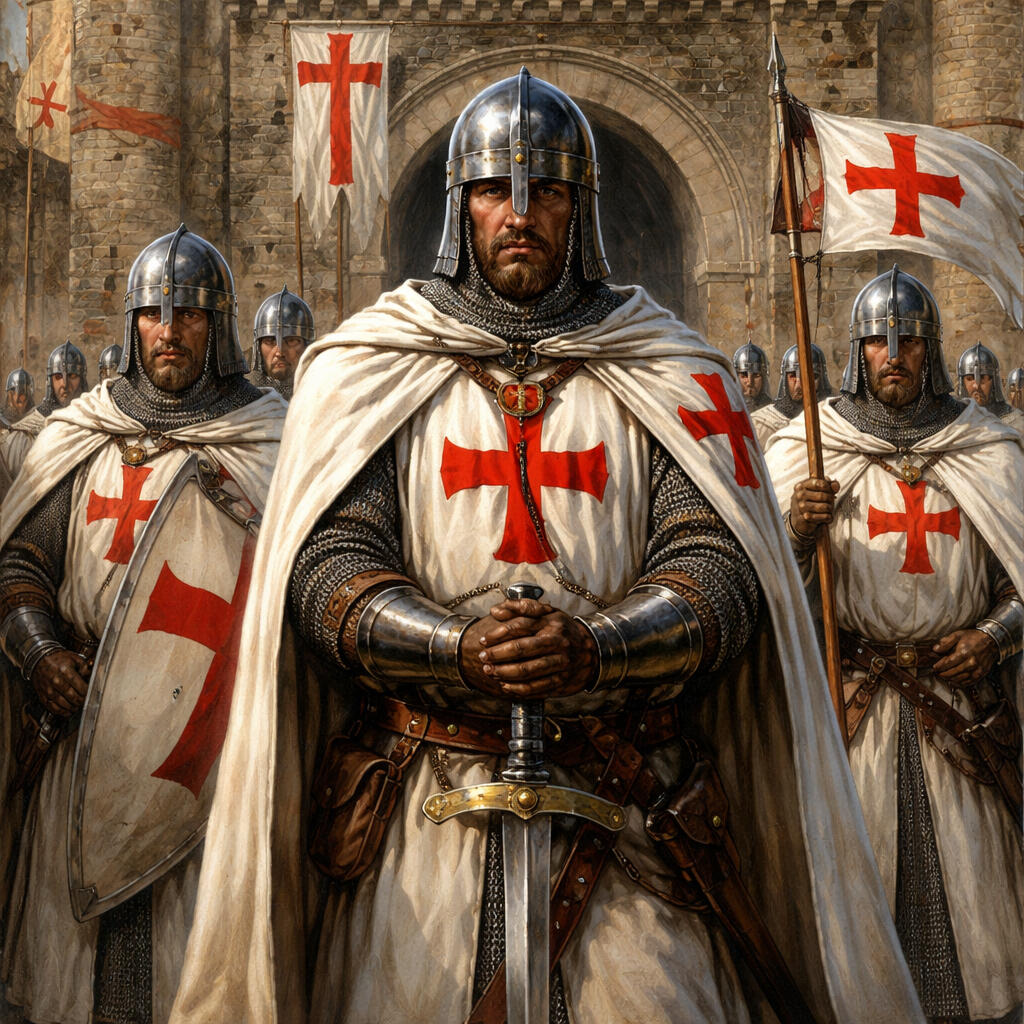
Most people shudder at Friday the 13th without knowing why. They knock on wood, avoid travel, laugh nervously at coincidence. Yet symbols are never born from nowhere. They are sedimentary. Layer upon layer of meaning, memory, and trauma compacted into cultural instinct.On Friday, 13 October 1307, King Philip IV of France ordered the mass arrest of the Knights Templar. At dawn, across France, members of the Order were seized, accused of heresy, blasphemy, and unspeakable rites. Confessions were extracted under torture. The Order was eventually dissolved. Its last Grand Master, Jacques de Molay, was burned at the stake in 1314.Now consider the symbolism.Thirteen disrupts completion. Twelve governs order: twelve months, twelve tribes, twelve apostles. Thirteen steps beyond containment. It unsettles symmetry.Friday, in Christian tradition, is the day of crucifixion. A day already marked by sacrifice, betrayal, and judicial theater.When these two charged symbols converged in 1307, they did so not as numerology but as lived catastrophe. A powerful spiritual and military order dismantled in a single orchestrated sweep. Wealth confiscated. Reputation destroyed. Faith weaponized for political leverage.Superstition often marks the site of suppressed history. Friday the 13th did not become ominous because of folklore alone. It became ominous because collective memory encoded betrayal into the calendar.As a symbologist, I look not at luck, but at pattern. When fear lingers around a date for centuries, I ask: what happened there? Who benefited? What narrative replaced truth?Friday the 13th is less about misfortune and more about power. It reminds us how swiftly institutions can collapse, how easily accusation becomes spectacle, and how symbols preserve what official history attempts to sanitize.Superstition is rarely irrational. It is memory in disguise.
The Triquetra: Not Magic, but Measurement
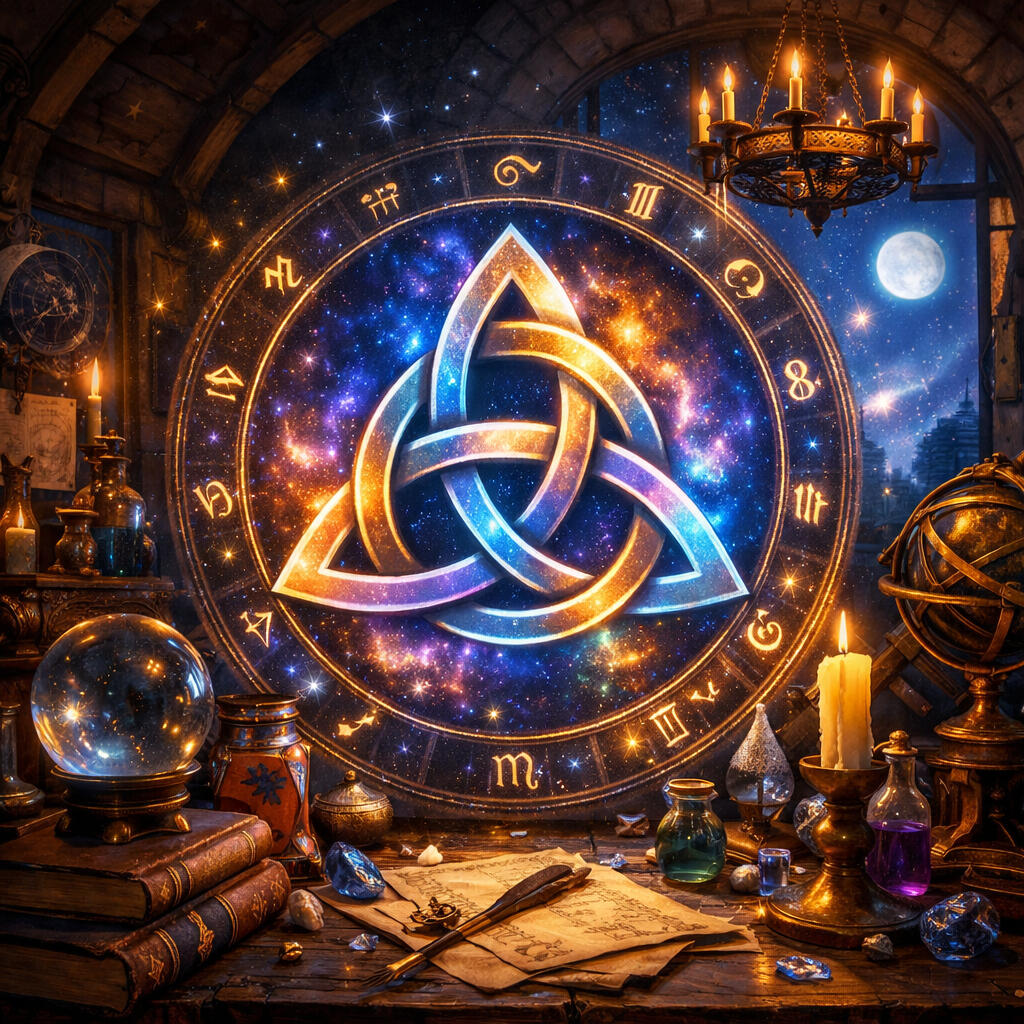
The triquetra is not a bauble of modern mysticism but a compression of cosmology. Three arcs, interlaced, imply continuity without hierarchy. Think in Enzmannian terms: image, mapping, cyclic time. It encodes seasonality, triple registers, sky–earth–underworld, and the perennial correction of lunar cycles to solar year. Not magic. Measurement. Continuity. Recurrence.Before Wicca borrowed it, the form already whispered of threefold structure embedded in nature itself. Birth, maturation, decay. Past, present, future. Observer, channel, source. In a universe where no signal travels without loss, the triquetra insists on linkage. Nothing stands alone. Each lobe completes the others.It is kin to the gammadion and swastika in this sense: not ideological, but calendric. A year turning. A cycle acknowledged. The difference is aesthetic emphasis. The swastika declares motion. The triquetra declares interdependence.Ask yourself: why three? Why does triadic structure recur from Indo-European myth to Christian theology to atomic stability? Is it superstition, or does cognition itself favor triadic mapping because it resolves tension into balance?From the Enzmann window, the triquetra is an image of dynamic equilibrium. Not a charm. A diagram.
Symbols of Camelot
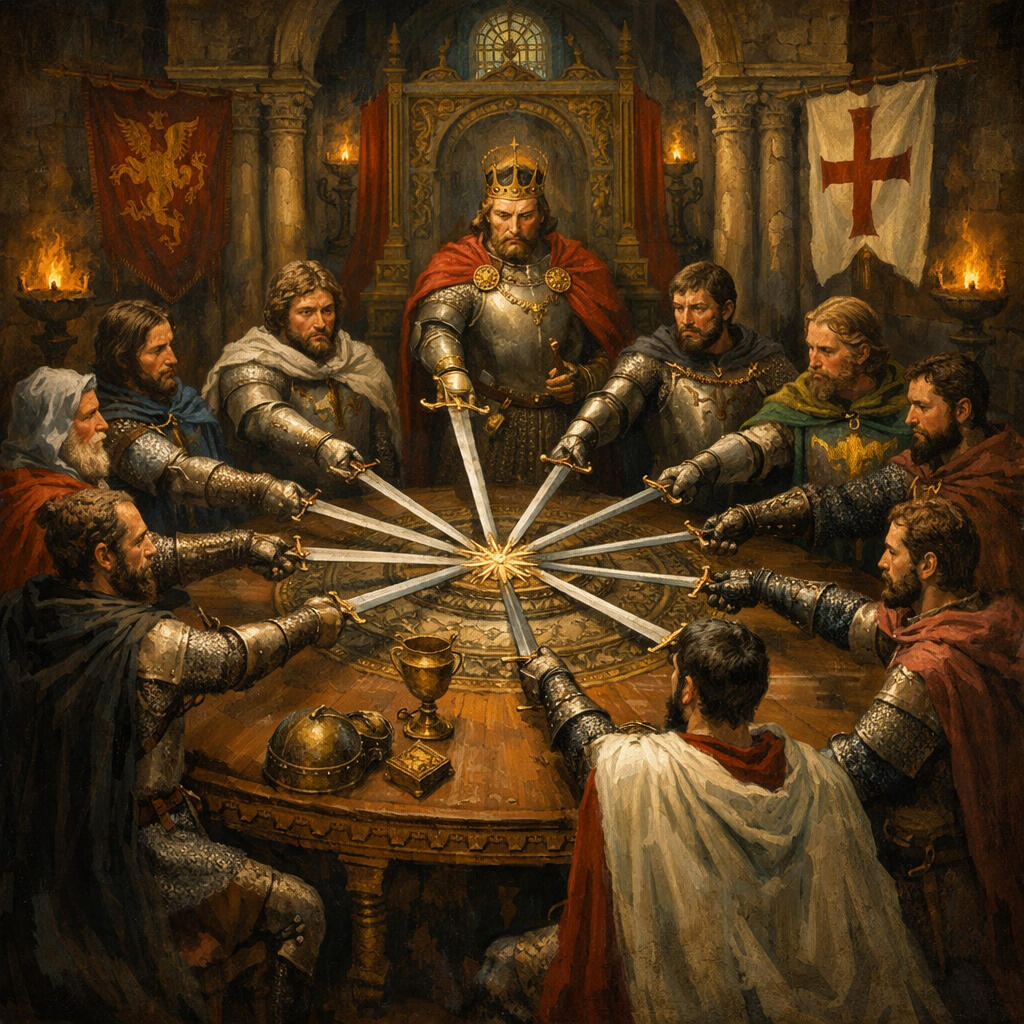
Arthurian legends have fascinated generations of readers. The Knights of the Round Table, Morgan Lafaye, and the Lady of the Lake come alive for those who immerse themselves in the romance and adventure of Camelot. Today’s popular young adult stories are fantasy and science fiction, sometimes merged together.The Knights of the Round Table have become archetypes of heroes who faced all manner of danger, both earthly and magical, to rescue women captured by their enemies, and find the Holy Grail. These characters are strong elements in fairy tales.Arthurian lore is abundant and tangled with history dating back tens of thousands of years; though it is shrouded in legend and magic we can decode these ancient symbols, dispel the magic, and clarify their meaning by placing them in context of time, climate, and history.Like other archetypal symbols, these have roots in symbolic records of ancient natural science. Morgan Lafaye, the mermaid fairy, derives her name from the Fata Morgana, a complex mirage which looks like land or buildings surrounded by water; an optical illusion caused by light passing through layers of air which are different temperatures. Ancient mariners would have encountered these mirages traversing the Mediterranean and connected waterways. Tales of disappearing castles surely preceded the discovery of the behavior of light and temperature.The Lady of the Lake is symbolic of the discovery by Celtic women of iron dripping from the peat burning in their hearths. When the iron was made into weapons for the oppressed army, the 1200 year Mediterranean blockade was broken. This is the basis for the knights returning their retired swords to the lake (the peat bog) assuring that more iron would be forthcoming if needed. Arthurian lore is replete with powerful archetypes which make relatable characters in modern stories.
The Shamrock Was Never Decoration
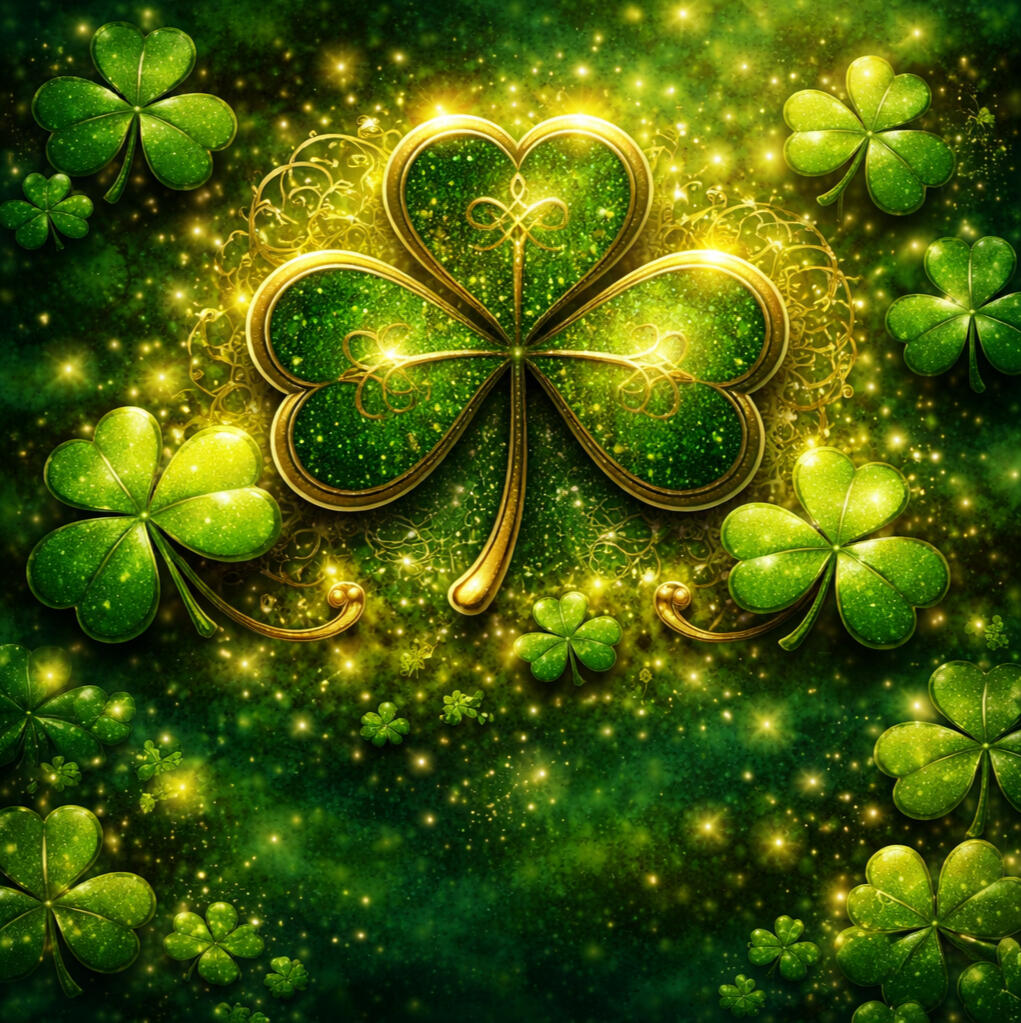
St. Patrick’s Day, as commonly celebrated, is a festival of green garments, clover leaves, and convivial excess. But symbols, when stripped of their modern trivialities, reveal something far older and far more deliberate.From an Enzmannian perspective, Patrick is not merely a saint, but a transmitter of structure. His most enduring symbol, the three-leaf clover, is not botanical decoration. It is instructional. Three in one. Unity expressed through multiplicity. A teaching device, yes, but also a reminder that reality itself is layered, not singular.Why did this symbol endure while countless others vanished into obscurity?Because it encodes a principle. The same triadic pattern appears across cultures, long before Patrick set foot in Ireland. It appears in cosmology, in theology, in the structure of matter, even in the way information organizes itself. Patrick did not invent it. He recognized it and deployed it with precision.The so-called “driving out of snakes” is equally misunderstood. Ireland had no snakes to begin with. So what was expelled? Not reptiles, but competing symbolic systems. The replacement of one worldview with another. A cultural overwrite, not a zoological miracle.And here the modern celebration falters.What was once a day marking the imposition of order and the transmission of encoded knowledge has become a spectacle of consumption. Green beer replaces green meaning. The symbol remains, but the understanding has been hollowed out.So ask yourself:What do you actually celebrate when you wear the shamrock?Is it heritage, or is it the echo of a much older instruction you no longer recognize?Symbols do not disappear. They wait. And on days like this, they resurface, quietly asking whether anyone still knows how to read them.
Easter and Bunnies?
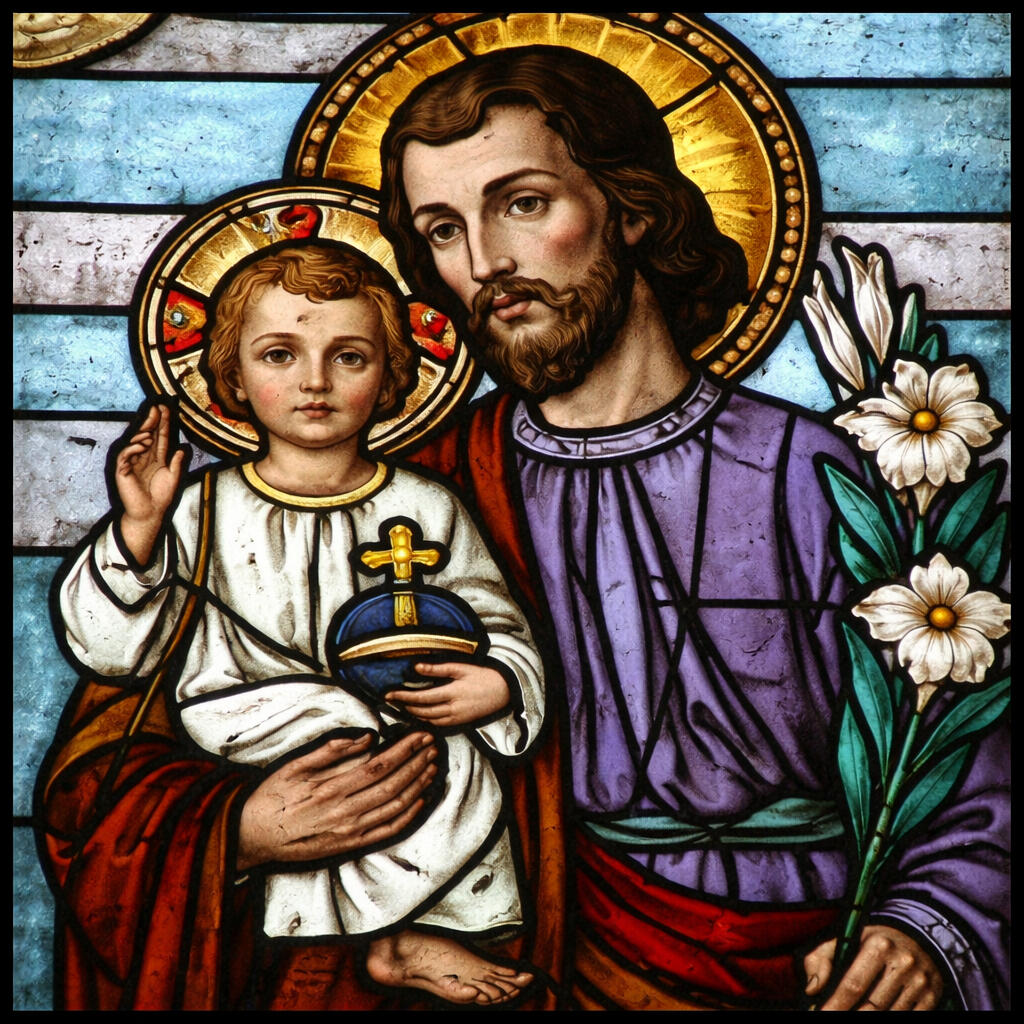
"Of course bunnies don’t lay eggs!" the mother told her daughter. But there was no forthcoming explanation of why Easter – the day of the risen King – was surrounded by baskets of fake grass, candy, chocolate, decorated hard boiled eggs, and cute fluffy bunnies. Never mind what all that has to do with going to church and the Resurrection of Christ. Easter is celebrated by Christians worldwide as the day Jesus rose from the dead, completing the promise of God.Easter is around the time of Spring Equinox. This date is connected with fertility rites, a practice at least 14,000 years old. It is an ancient practice, love in spring. A Paleolithic calendar instructs the cycles of human reproduction: that babies should be conceived in spring, to be born around winter solstice. Winter babies during the ice age had the best chance of survival: Families stayed inside, and newborns got a maximum of attention.Families were paramount, babies meant the continuation of the human race. Still do.Spring Equinox became a time of sexual activity in an effort to produce as many healthy children as possible at winter solstice (now Christmas). Over time rabbits (known for their rapid reproduction) and eggs (from where chicks come) became fertility symbols. And everyone knows chocolate is food for romance. Fertility rites were celebrated in ancient Greece, then Rome. Goddesses such as Aphrodite, Demeter, Venus, Kali, Ostara, and Ishtar are connected with cult celebrations of fertility. The Teutonic goddess of the dawn known as Eastra is said to be the basis of the word Easter, eastre being a root word for spring, east being where the sun rises.Springtime promises new life. Fertility rites celebrate new life. The resurrection of Jesus Christ celebrates new life.Then, as now, life was sacred, babies were precious, and the sun gave warmth and made the food grow. People may celebrate life in different ways, but the life they celebrate is the same. We color Easter eggs and hide them for the kids to find (reminiscent, I think, of Ruth in the fields of Boaz), color pictures of bunnies and little yellow chics, go to church in our best spring clothes, and eat lots of chocolate. After Easter dinner of course.So Happy Easter.
May the Sun, and the Son, bless your life, and bring you hope, warmth, and the love of family. – Dr. Michelle
Popes, Kings, and Templar Things
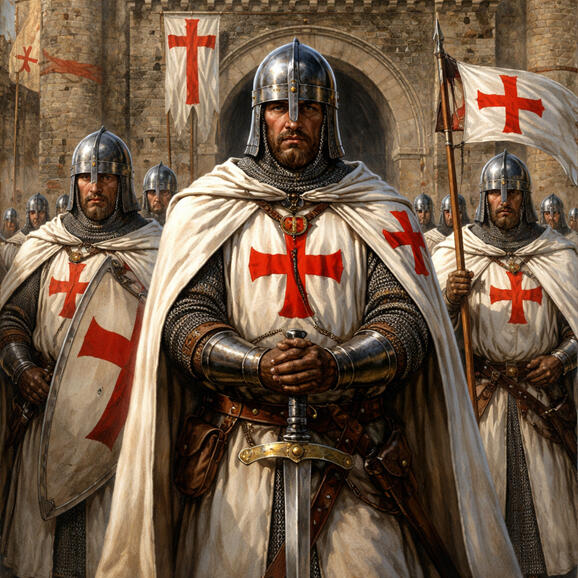
Text
What follows is not the romance of cloaks and candles so beloved by modern hobbyists, nor the catechism of ecclesiastical chroniclers whose first loyalty was survival, not truth. It is history as Bob Enzmann practiced it.Uncomfortable, connective, and intolerant of official myth. The Knights Templar emerge here not as an isolated medieval order, but as a pressure wave moving through centuries of economics, ethics, warfare, and institutional panic. Those who expect pageantry will be disappointed. Those who expect causality may, at last, feel at home.The Templars did not arise because Jerusalem was holy. Jerusalem has been holy to everyone and therefore owned by no one. They arose because Europe, fractured, illiterate, and economically primitive, suddenly required a transnational instrument capable of moving men, gold, food, and information across hostile terrain faster than kings could steal it. The Crusades merely supplied the pretext. The Templars supplied the infrastructure.By the late twelfth century, when Saladin retook Jerusalem, the Templars were already something far more dangerous than warriors. They were logisticians. They learned quickly that swords are transient, but credit is permanent. While monarchs debased coinage and bishops preached poverty from gilded pulpits, the Templars invented mechanisms of trust. Letters of credit. Secure transport. Accounting practices that did not depend on royal honesty, which is to say accounting practices that worked. Venice and Genoa flourished not because they were virtuous, but because Templar-backed finance made maritime commerce survivable. Where money flowed, independence followed, and suddenly the Holy Roman Empire found Italian cities slipping from its grasp. The Vatican noticed. It always notices.The Fifth Crusade should have ended the fantasy. When the Egyptian Sultan offered Jerusalem in exchange for peace, only a fool or a zealot would refuse. Papal legate Pelagius managed to be both. Sixty thousand crusaders marched into the Nile Delta against geography itself and were duly drowned, starved, or captured. Responsibility required reflection. Instead, blame required a scapegoat, and Frederick II of Hohenstaufen served admirably. Excommunication followed, as it so often does when competence threatens clerical authority. The lesson was not lost on the Templars. They observed how catastrophes were laundered into moral failures, and how power preserved itself by rewriting causality.By the mid thirteenth century, Europe entered the Great Interregnum. No emperor. No king. Authority fractured into opportunism. This vacuum did not weaken the Templars. It strengthened them. They were accustomed to operating without sovereign protection, because sovereignty itself was their competitor. Meanwhile, new forces pressed from the east. Mongol armies shattered established orders, converted when convenient, and weaponized subject populations in brutal migrations westward. The Templars and their descendants would contest these pressures for centuries, long after papal bulls and royal decrees turned to dust. History remembers battles. Enzmann reminds us to remember who endured.The true collision came not from Islam, nor from steppe horsemen, but from debt. Philip IV of France, called “the Fair” with an irony history rarely acknowledges, ruled a bankrupt kingdom. His solution was archetypal. Inflate the currency. Tax necessities. Expel Jews. Plunder Lombard bankers. When these measures proved insufficient, he turned his gaze toward the one institution richer than his crown and less able to defend itself in public opinion. The Templars had assets. The Church had narratives. The alliance was inevitable.The destruction of the Templars was not theological. It was forensic theater. Accusations of heresy, blasphemy, idolatry, and sexual deviance were not discovered; they were assembled. Torture provided confessions. Confessions provided legitimacy. Legitimacy provided confiscation. Pope Clement V, safely relocated to Avignon under French influence, obliged with the appropriate decrees. What followed was not a trial but an inventory.Treasure flowed not to the Hospitallers as piously announced, but into royal coffers. Families were shattered. Survivors vanished. Jacques de Molay burned while the machinery of Church and State congratulated itself on righteousness.The symbolism is not subtle. When institutions cannot outgrow their dependence on coercion, they destroy innovators and call it purification. The Templars had violated an unspoken rule. They proved that power could exist independent of throne and altar. That is the one heresy no system tolerates.Yet the Templars did not end. They dispersed. Scotland, Britain, the Baltic, the Rhineland. Banking practices endured. Ethical frameworks endured. The insistence on obligation to widows, orphans, and family farms endured, rooted not in medieval invention but in loess-land economies tens of millennia old. Enzmann was unapologetic about this continuity. Ethics are not voted into existence. They are discovered, violated, rediscovered, and defended again by those willing to pay the cost.The red cross the Templar wore was not decoration. It was cosmology. Dawn, resurrection, orientation toward the East. Symbols older than Christianity, suppressed, resurfacing whenever institutional memory decayed. The same symbolic thread winds through later Masonry, through the Royal Society, through Enlightenment encyclopedists who understood that knowledge itself is a form of resistance. Predictably, encyclopedias were banned, libraries burned, literacy opposed. When ignorance ceases to serve power, power declares ignorance sacred.Modern Masonic bodies inherit fragments of this legacy, often without understanding its cost. They preserve ritual while forgetting why secrecy was once necessary. They repeat symbols while avoiding the conclusions those symbols demand. Enzmann would not indulge that amnesia. He would ask why men commemorate builders while tolerating systems that forbid construction of independent minds.
The Templars were not saints. They were not magicians. They were an experiment in transnational ethics and applied intelligence, conducted prematurely in a world not yet capable of tolerating either. Their suppression delayed Europe’s maturation by centuries. Their ideas, however, proved more durable than their enemies. Kings died. Popes died. Credit survived. Symbols survived. The question, as always, is whether we are worthy heirs or merely costumed custodians of relics we no longer comprehend.History does not repeat. It waits.What follows is not interpretation, rhetoric, or symbolic extrapolation, but a skeletal confirmation list of dates and events explicitly embedded in the article. Think of it as the ship’s log after the voyage, not the voyage itself.1187
Saladin retakes Jerusalem from the Crusaders, ending Christian control of the city and exposing the fragility of Crusader logistics and governance.
Late 12th to early 13th century
The Knights Templar evolve from a military order into a transnational financial and logistical power, developing secure transport of bullion, letters of credit, and early banking networks across Europe and the Levant.
1218–1221
The Fifth Crusade invades Egypt. Crusaders capture Damietta but reject an Egyptian offer to exchange Jerusalem for peace. Papal legate Pelagius leads a disastrous march toward Cairo, resulting in surrender after being trapped by Nile flooding and Egyptian naval forces.
1227
Holy Roman Emperor Frederick II is excommunicated after illness forces him to abandon a planned crusade.
1241
The Vatican engineers near-conflict between the Knights Templar and the Knights Hospitaller, an early attempt to weaken the Templars internally.
1250–1273
The Great Interregnum in the Holy Roman Empire, marked by the absence of a universally recognized king, increasing political fragmentation across Europe.
1260
The Mongols are defeated by the Egyptian Mamluks at the Battle of Ain Jalut, halting Mongol expansion into the eastern Mediterranean.
Late 13th century
Mongol khans convert to Islam, and Mongol-influenced forces participate in prolonged campaigns against Byzantine, Greek, and Balkan populations.
1291
The fall of Acre, the last major Crusader stronghold in the Levant. The Templars retreat to Cyprus.
Late 13th century
The Knights Templar consolidate banking operations centered in Avignon, Paris, London, Frankfurt, Venice, Rome, and Genoa, formalizing systems resembling modern checks and international finance.
1285–1314
Reign of King Philip IV of France, during which heavy taxation, currency debasement, expulsion of Jews, and persecution of bankers destabilize the French economy.
1303
Pope Boniface VIII is imprisoned at Anagni by forces allied with Philip IV and dies shortly thereafter.
1305–1314
Pope Clement V reigns and relocates the papal court to Avignon, placing the papacy under strong French influence.
1306
Philip IV expels Jews from France, confiscating their property and wealth.
1307
The arrest of the Knights Templar begins in France under orders from Philip IV, marking the start of the formal suppression of the Order.
1311
The Council of Vienne formally charges the Knights Templar with heresy and blasphemy.
1312
Pope Clement V suppresses the Order of the Knights Templar, decreeing the confiscation of their property, nominally to the Hospitallers but largely seized by the French crown.
1313–1314
Widespread torture and execution of Knights Templar across France and parts of Europe in attempts to extract confessions and locate alleged hidden treasure.
1314
Jacques de Molay, Grand Master of the Knights Templar, is burned alive at the stake in Paris.
1315–1317
A period of severe climatic cooling and crop failure known as the early Little Ice Age devastates European agriculture.14th century aftermath:
Surviving Templars and Templar assets disperse into Britain, Scotland, and other regions, contributing to later developments associated with Scottish Rite Masonry.This list is the ledger. The article is the balance sheet. Anyone who disputes one must reconcile it with the other.
Sacred Mothers
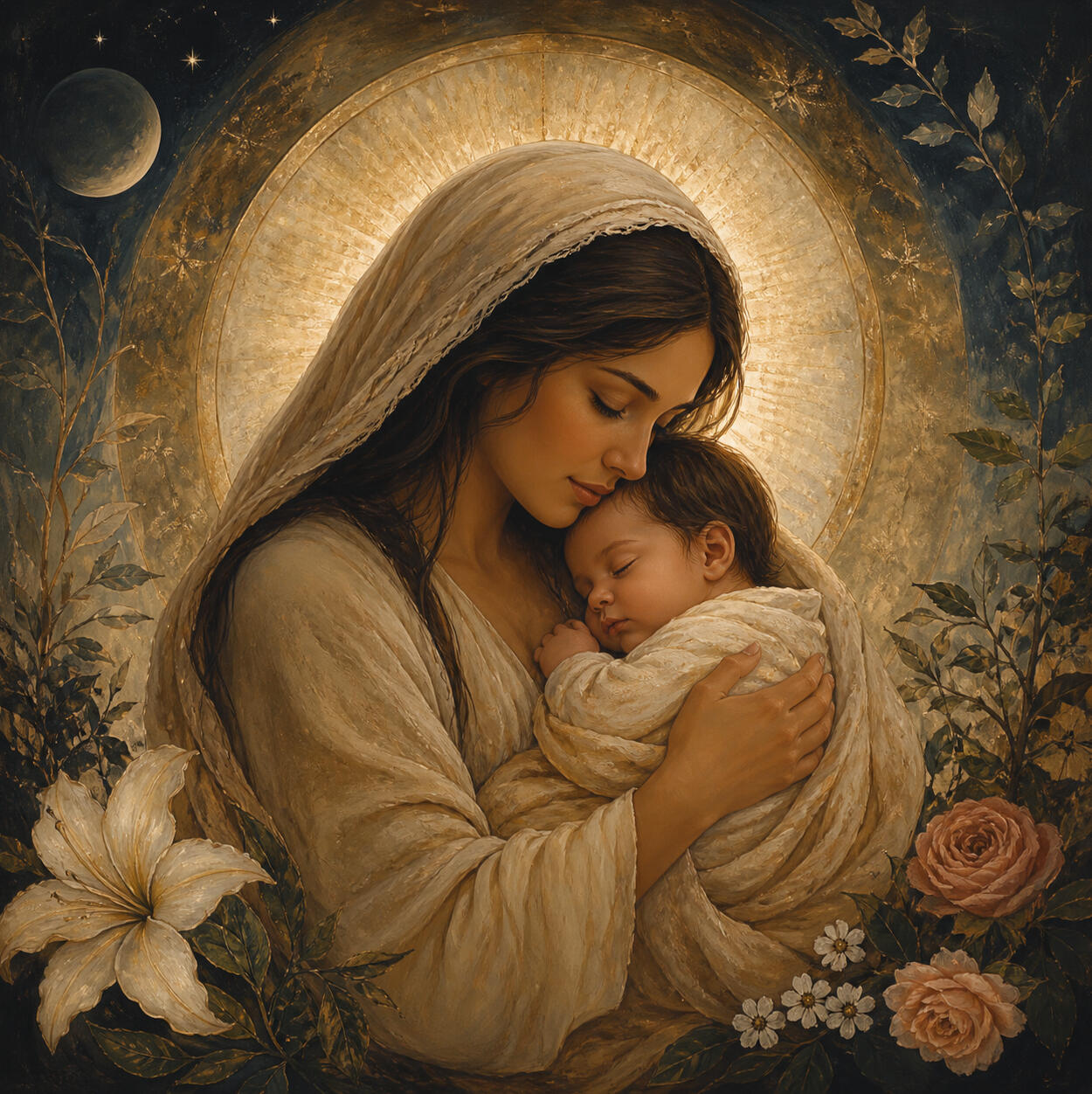
From the earliest strata of human memory, long before marble temples or printed scripture, the figure of the mother stood not as metaphor but as necessity. Life emerges through her. Continuity depends upon her. Remove the mother, and the grand human narrative collapses into silence. This is not sentiment. It is structural reality.Across millennia, humanity has attempted to encode this reality into symbol. Consider the ancient carvings and inscriptions, some reaching back over 14,500 years, which record mothers tending their young, preserving life against indifferent nature. These are not casual observations. They are declarations of survival.Yet symbol, if you are attentive, does not remain primitive. It evolves, accumulates, refines. What begins as the simple image of a woman with a child becomes something far more potent: an archetype. Not a mere picture, but a vessel of inherited memory. A pattern impressed upon the human mind through repetition across generations.And here we arrive at one of the most enduring images ever conceived: the Madonna and Child.Now pause. Do not rush past it as a religious cliché. Ask yourself, why this image? Why does it persist, across cultures, across centuries, across shifting belief systems?From an Enzmannian perspective, the answer is neither mystical nor trivial. The Madonna and Child is the distilled symbol of continuity within an informational universe. It is the visual shorthand for transmission. Not merely of biology, but of knowledge, culture, and survival itself.The mother does not simply produce life. She encodes it. She carries forward the accumulated experience of humanity, embedding it within the next generation. What you call instinct, what you call tradition, what you even call love, are in part the mechanisms by which this transmission occurs.Observe the image carefully. The child rests, vulnerable, unfinished. The mother surrounds, protects, stabilizes. This is not passive tenderness. It is active guardianship of the future. The entire trajectory of human civilization is, in that moment, held in her arms.And yet, humanity exhibits a peculiar amnesia. It worships the image, then neglects the reality. It celebrates Mother’s Day with flowers, cards, and convenient gestures, while often overlooking the magnitude of what is being honored.Mothers are not merely caregivers. They are the primary architects of human continuity. The phrase “the hand that rocks the cradle rules the world” is not poetic exaggeration. It is a blunt statement of causal power.Even in modernity, where roles have diversified and responsibilities are shared, the archetype remains intact. Daycare provider or biological parent, grandmother or guardian, the function persists. The mother, in all her forms, sustains the chain.So what, then, is Mother’s Day?Is it a ritual of gratitude? Certainly. But more profoundly, it is a moment of recognition. A brief alignment of awareness with reality. A day in which humanity pauses, however imperfectly, to acknowledge the foundation upon which it stands.You might ask yourself a more uncomfortable question. If the mother is so central, why does society so often treat her as peripheral? Why is the archetype revered while the individual is overlooked?That tension is not accidental. It is the perennial human failure to reconcile symbol with substance.This Mother’s Day, then, do more than perform the expected gestures. Call, write, visit, yes. Bake the cake, bring the flowers, offer the token of affection. But understand what you are responding to.Without her, you do not exist. Without her, neither does the future.And if that realization does not give you pause, one wonders what possibly could.
Memorial Day Thoughts
Memorial Day is about remembering. It’s about appreciating the sacrifice of others who had a vision of freedom for a whole nation. This vision was not embraced lightly – they knew that freedom would be obtained with great difficulty, and that it could slip away easily, quietly in the night. These warriors who fought to support this vision died hoping that decades down the road they would have made a difference. They admonished us to be ever vigilant.What we can ponder upon as we enjoy the sunshine this weekend is: what is freedom? Do we have the same vision as the great ones whose vision resulted in America?This is a great country. Not perfect, but great. We may be called upon to make sacrifices to maintain our freedom. Perhaps even asked to die for it. Would you?Thank you to all who serve in our national defense system. Thank you to the families who have lost loved ones for the sake of freedom. No, we are not perfect, yes we make mistakes. Leaders are human. It is up to the PEOPLE to make sure that our leaders are wise and have the vision to move us forward, to create sustainable relationships with other countries, and not to be deceived.Thank you to those who sacrifice time with loved ones who are in active service.Without you we would not be free.
The Gift of a Father
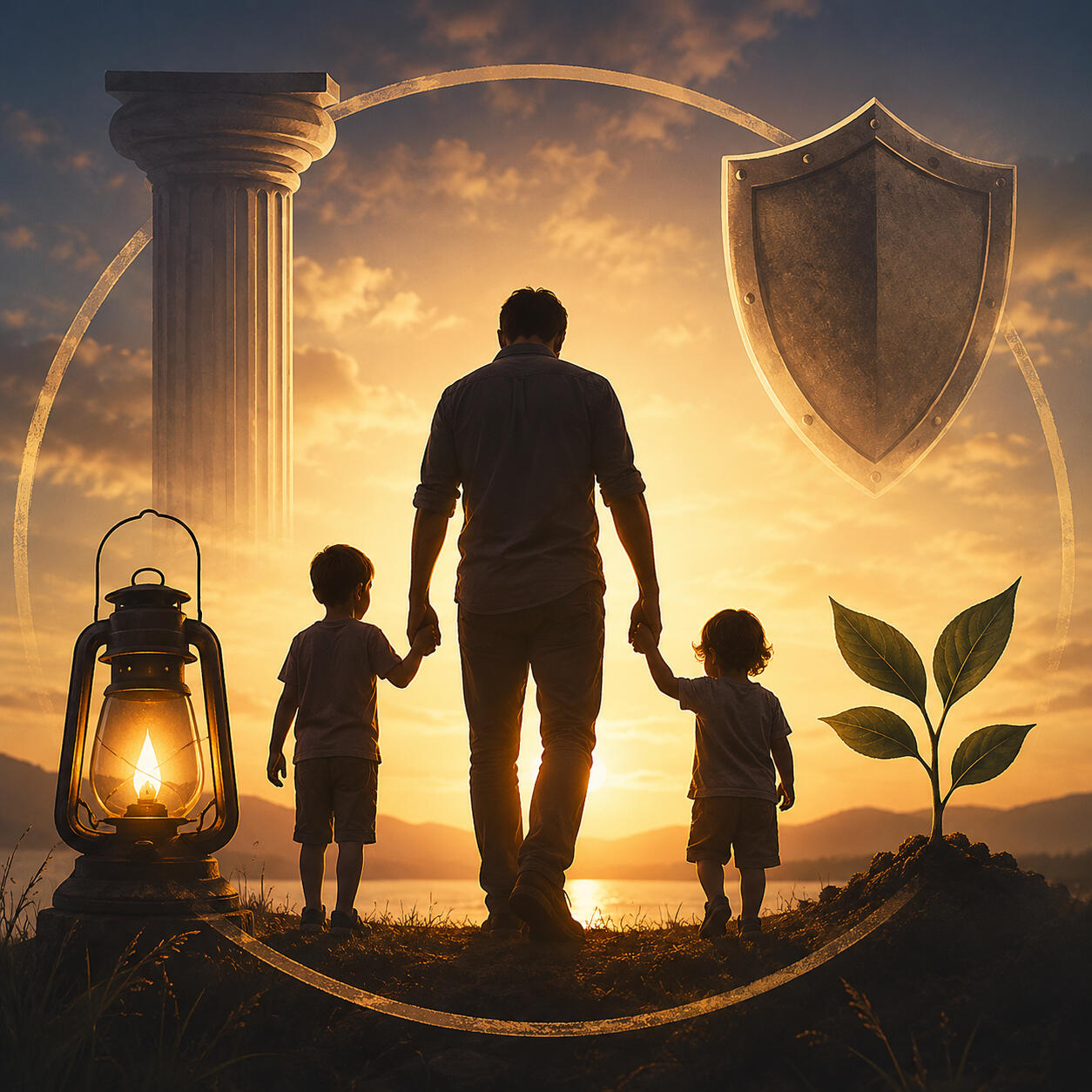
A father is more than a parent. Symbolically, he is a pillar, a shield, a lamp, and a seed-bearer.He is the pillar that gives strength to the house, the shield that stands between danger and the child, the lamp that teaches by example, and the seed-bearer whose wisdom and character pass into future generations.On Father’s Day, we honor fathers, grandfathers, and father figures who give guidance, protection, discipline, sacrifice, and love.Their legacy is not only what they provide, but what they awaken in those who follow.Happy Father’s Day.
Aura Medicine
Medical science is always at odds with believers of divine healing, yet modern medicine is in itself miraculous. There are recorded cases of miraculous cures.The art of healing is by nature akin to the supernatural. The will to live is a very effective deterrent. Ancient healers did effect astonishing cures – did a deity intervene?There is a psychic factor to color. It is appealing, emotional, and inspiring; suggestive of something mysterious. The study of the human aura provides a clinical environment in which to gain knowledge about color and healing. The subject of human aura is not necessarily mystical. Even the most skeptical knows that the body radiates heat and odor. In the right circumstances this emanation can be seen.Photographers such as Carlo Van de Roer do biofeedback photographs of these emanations.
The human aura is affected by the condition of the body, by health or illness. To some mystics, astral light is a healing force, representing the divine deity shining from within.An auric healer has three methods: thought transfer, influencing the patients aura, and encouraging the right emanations. The healer meditates on certain hues to build up his own aura, thus affecting the aura of his patient. This is a mental and spiritual process, not one using lights or colored material.To modern medical doctors the theories of the auric healer may seem ridiculous fantasy, nonetheless the aura cannot be ignored if the healing sciences are to practice what they preach. Any number of investigators of this phenomenon, no matter how skeptical, admit that simple colors surrounding the body are visible to the eye.Kirlian photography has documented these magnetic rays around both the living and the inanimate.John 1:4 says “...life was the light of men.” Ancient mystics worshiped light. They believed that light was divine, that it filled all living things, and that it brought with it knowledge of the divine. This is in accordance with practitioners of auric healing – that the divine light within life can be observed, and that it can be used to heal.